China’s Rapid Rise in Fossil Fuel Free Construction Machinery: Lessons for Australia


October 16, 2026


On Australian construction sites, diesel still does most of the heavy work. Excavators, loaders, cranes and bulldozers burn it on every project. Fuel costs, noise, site air quality, and A5 emissions that sit inside upfront embodied carbon all tie back to the same machines.


Infrastructure Australia puts construction process emissions (A5) at about 20 per cent of upfront embodied carbon, and upfront embodied carbon at about 7 per cent of national emissions. The Australian Sustainable Built Environment Council (ASBEC) Our Upfront Opportunity report, published in March 2025, says the Australian built environment needs to cut its embodied carbon emissions by at least 60 per cent by 2035. Whatever the wider policy debate, the practical question is: which machines can stop burning diesel, on which sites, and at what cost?


Recent research from the The International Council on Clean Transportation (ICCT) in September 2025, along with full-year 2025 sales figures from the China Construction Machinery Industry Association, shows how far China has come in electric construction machinery. Their progress is useful because it shows where the shift is already commercial and where it is still early.
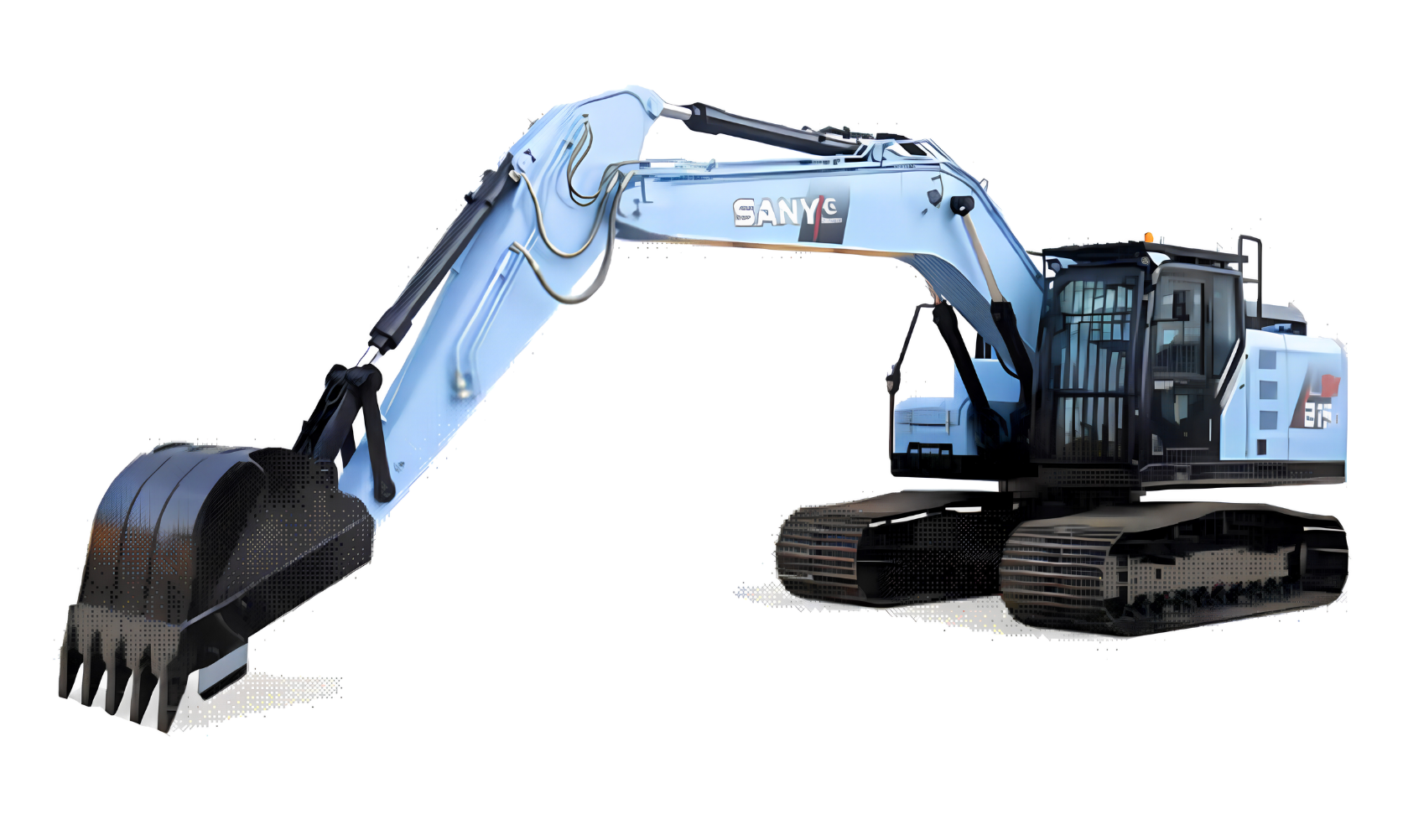

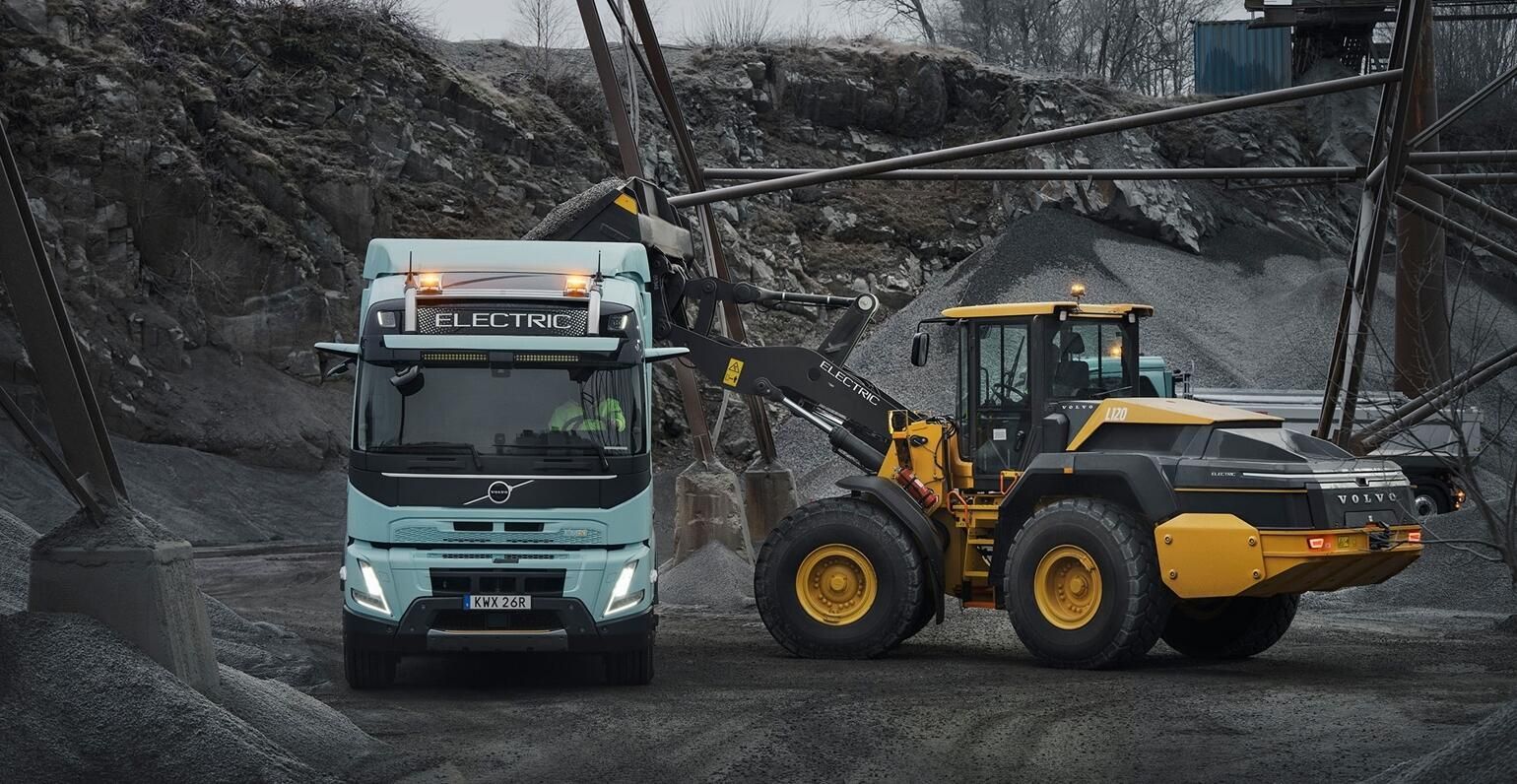
SANY electric excavator. Models are widely available. Volume sales of electric excavators are still small.


China’s Construction Machinery Boom: A Snapshot of 2025

China already builds a large share of the world’s excavators, loaders and cranes. The sharper story is how quickly some categories are moving off diesel.


According to the ICCT’s September 2025 market spotlight, and later full-year sales data:


  • Model range: By the end of 2024, China had nearly 200 different models of electric construction machinery. Excavators (81 models) and loaders (76 models) made up more than 80 per cent of that range. XCMG led with 33 models, followed by SANY Group with 21 and LiuGong with 18.
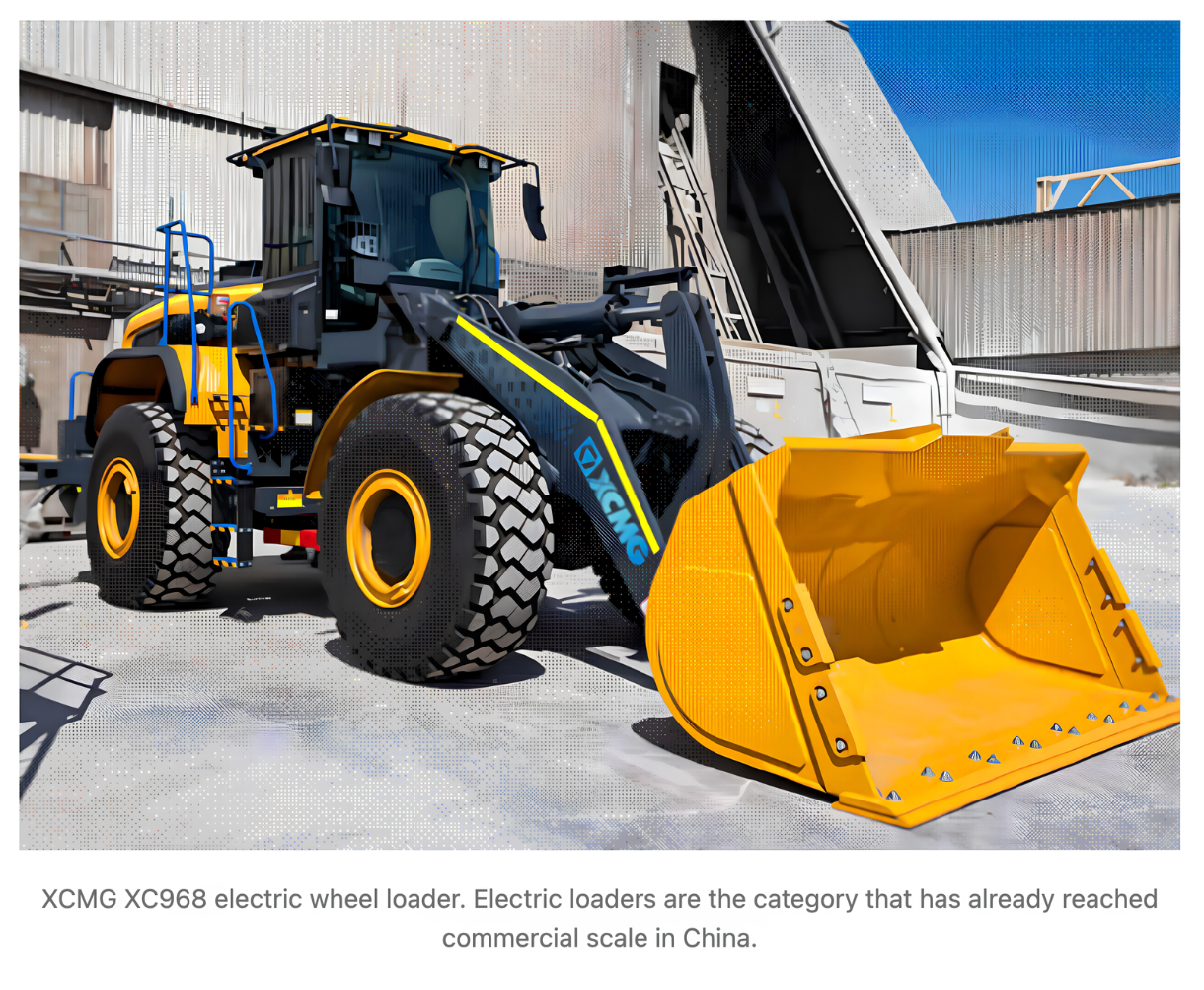
  • Electric loaders are the clear leaders: Full-year 2025 sales reached 29,771 units, up 165 per cent from about 11,220 in 2024. That is a 23.25 per cent share of total loader sales (128,067 units). Domestic penetration was substantially higher. In the first half of 2026 the overall penetration rate moved past 30 per cent.
  • Electric excavators remain early: In 2025 only about 285 electric excavators were sold in a total excavator market of about 235,000 units, a penetration of roughly 0.12 per cent. First-half 2026 sales were 321 units, or about 0.21 per cent. The models exist. The volume does not yet.
  • Battery and cost: CATL held about 39 per cent of the global EV battery market in 2025. In high-utilisation Chinese sites, the ICCT casebook found electric machines delivering 50 to 86 per cent energy-cost savings, with payback under two years in some cases. Battery claims for passenger cars, such as 1,000 km range or five-minute charging, should not be applied to construction machines without site evidence.
  • Drivers: Local air-quality rules, industrial policy, and simple operating costs have pushed the shift into categories where the economics already work.
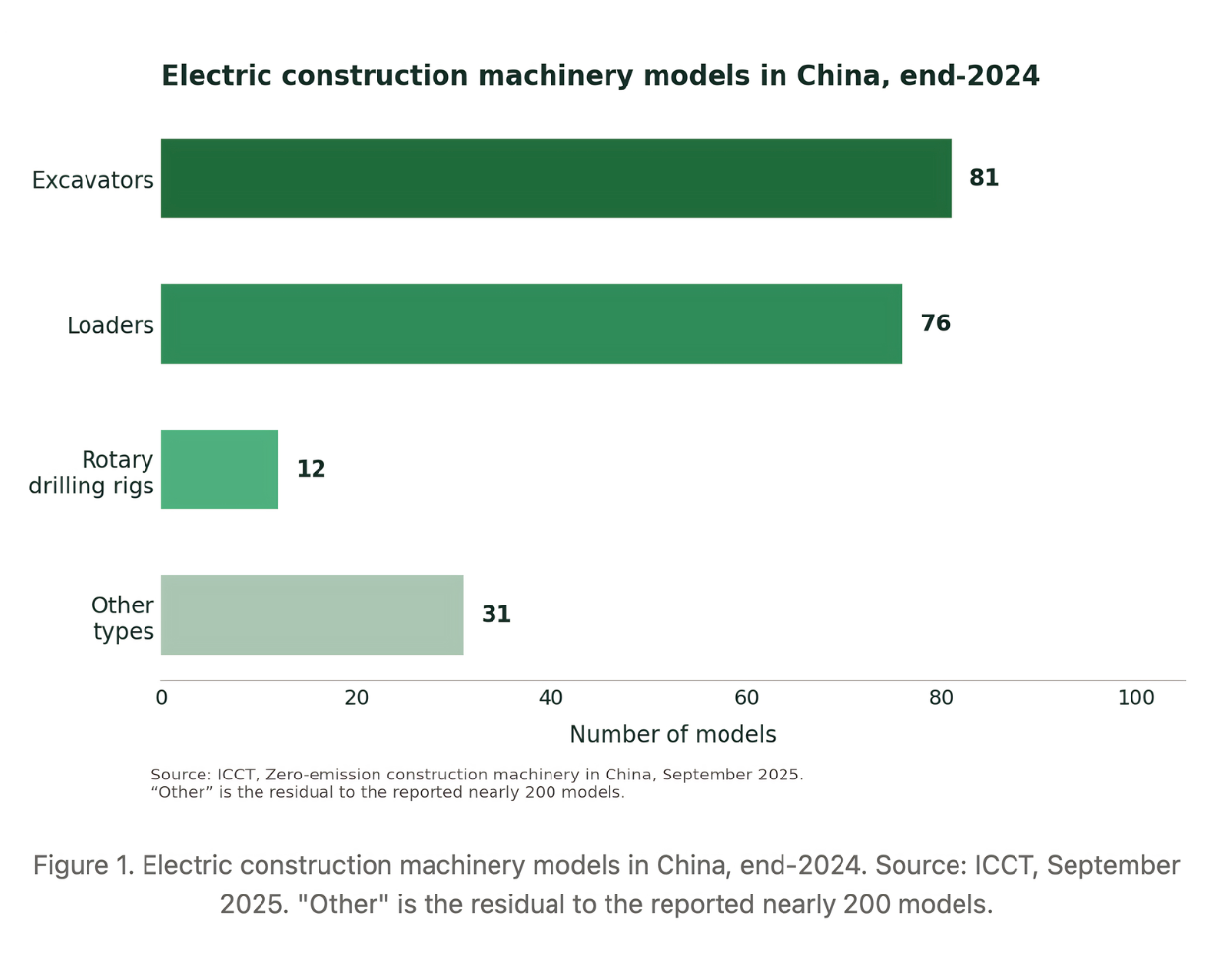
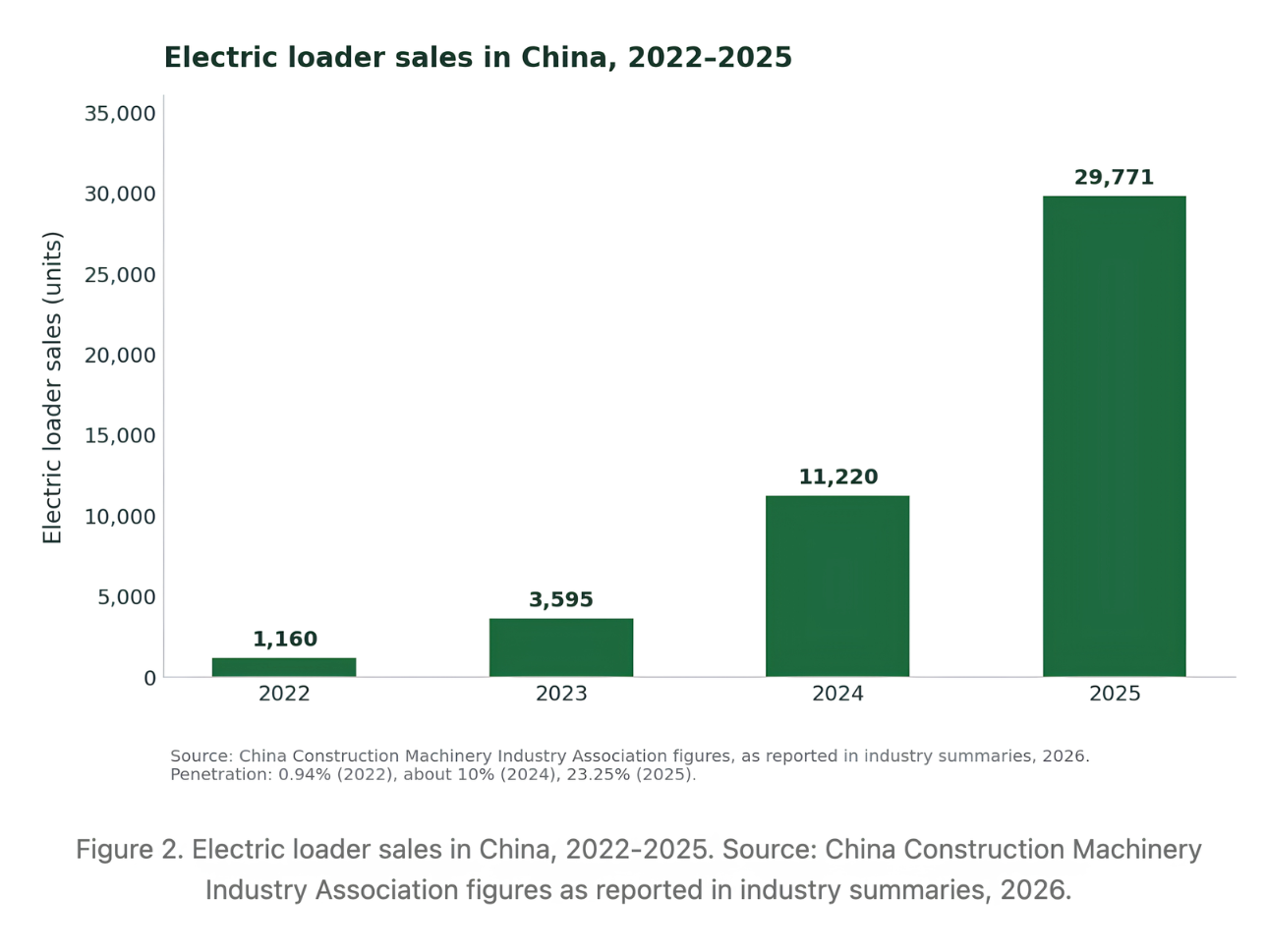
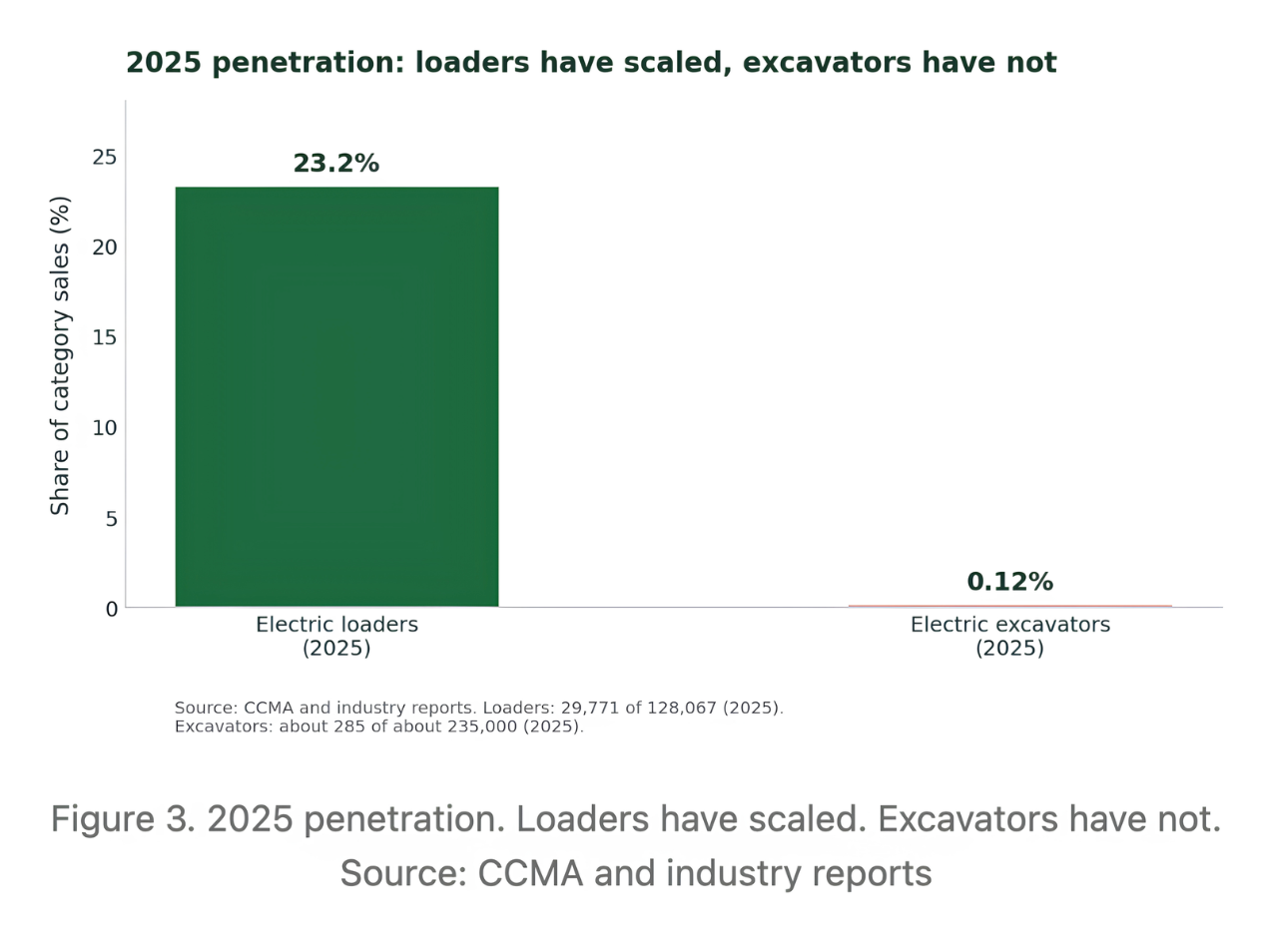
The practical lesson is that the shift away from diesel is uneven. Loaders have crossed into commercial scale. Excavators, which do more of the heavy work on most Australian sites, have not.


Lessons for Australia: What We Can Learn

Australia’s construction sector still runs on large volumes of diesel. Civil construction is particularly exposed. China’s experience does not give a simple blueprint, but it does show where the first commercial openings are.


  • Start where the economics already work: Electric loaders and fixed or high-utilisation machines are the nearest term. Sites with reliable power and predictable duty cycles will see the cost case first. Excavators and mobile plant on remote or variable sites will take longer.
  • Supply chain: Chinese OEMs such as SANY and XCMG, and battery suppliers such as CATL, have moved faster than most Western manufacturers in these categories. Australian contractors and plant managers need direct contact with that equipment, not just the local dealer catalogue, to judge what can be specified here.
  • Focus the effort: China moved the categories that were ready. Australia could usefully start with public projects and high-utilisation fleets, rather than a single date for all plant.
  • Site power and logistics: Fast-charging or battery-swap electric machines only work if the site has the power and the plan. That is as much a project-management question as a machine question.

The Path Forward: A 2026 Study Tour to China

We cannot afford to watch this shift from the sidelines. Mansfield Advisory, with AATL and Refuelling Solutions® trading as Mini-Tankers® and Maxi-Tankers® Solutions, is organising a focused seven-day industry study tour to China from 22 to 28 November 2026.


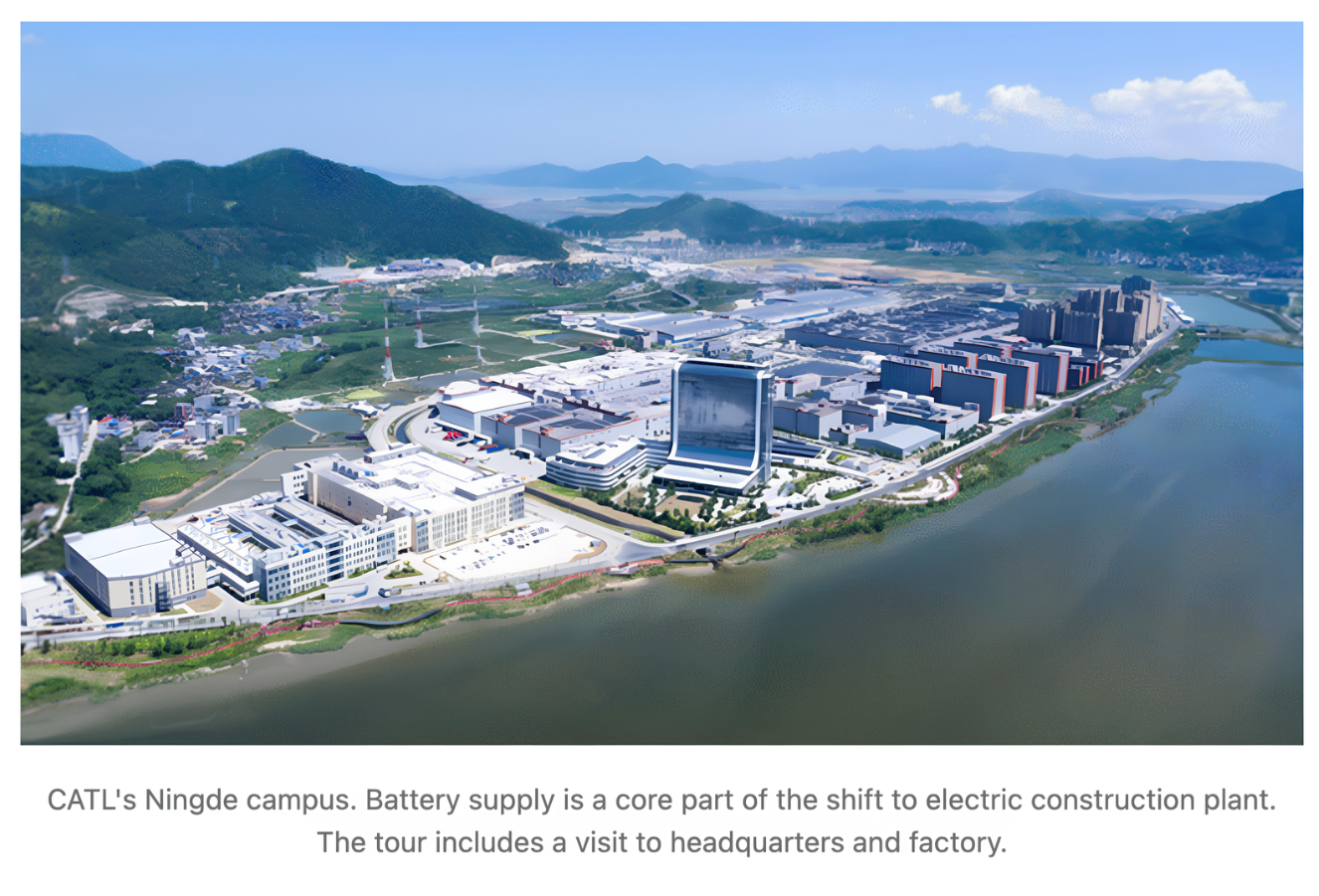
The week is built around what Australian construction leaders need to see: bauma CHINA in Shanghai, including an XCMG stand meeting and outdoor electric machine displays; a live Shanghai construction site; a SANY factory day in Changsha; and CATL headquarters and factory in Ningde. Working sessions cover Australian pathways and what transfers. The group flies from Xiamen to Sydney on a direct Xiamen Airlines flight.


Engagement is underway with Austrade and the China Industry Construction Association to explore collaboration opportunities and support for delivering a high-value study tour.


Fossil fuel-free construction is no longer a general idea in China. In some categories it is already commercial. In others it is still early. The useful question for Australia is which machines, on which sites, can leave mineral diesel behind now, and which still need a bridging fuel.


If you are interested in joining the tour, reach out to register your interest. Brochure details.


By Jeremy Mansfield OAM, Mansfield Advisory Pty Ltd


More on Fossil Fuel-Free Construction

Mansfield Advisory continues to work on practical pathways for fossil fuel-free construction.


Previous articles

By looka_production_140421591 • October 5, 2026
By Jeremy Mansfield, 29 September 2026  Published on TheFifthEstate Australia has set itself two difficult tasks: build vastly more homes and cut the upfront carbon locked into the materials we use to build them. New analysis from Deloitte Access Economics suggests an Australian engineered bamboo industry could make a measurable contribution to both. By 2035, under the report’s high-growth scenario, Australia could produce enough engineered bamboo for the equivalent of around 16,600 homes a year and avoid around 430,000 tonnes of greenhouse gas emissions in that year, about 1.5 per cent of the built environment’s upfront embodied carbon. The report also estimates the construction sector could gain an average $111 million in additional value each year. So, what stands between that 1.5 per cent opportunity and the buildings we actually build? The gap between crop and construction Last January in The Fifth Estate , I wrote that Australia’s net zero settings still default to slow plantation cycles, and that public finance has no real home for fast-growing biobased materials. The Bamboo Breakthrough roadmap and the analysis now give investors something firmer to look at. A local engineered bamboo industry could be an $847 million a year market by 2035 under a high growth scenario. This would add about $906 million to GDP and support around 1840 jobs. About three-quarters of those jobs are in manufacturing. The material volume under the scenario is equivalent to about 250,000 cubic metres a year. However, Australia currently has no coordinated commercial plantation base. No domestic manufacturer of structural engineered bamboo. No deemed-to-satisfy path in the National Construction Code. Performance solutions can carry early projects, as they have done for mass engineered timber. Policy and funding frameworks were written around incumbent materials. Harvesting and manufacturing must move with the crop. One without the other does not work. Building the evidence base The first four years in the report’s pathway are about proving the product and taking risk out of delivery. That is now, not 2035. The first project is not a national hectare target. It is a pilot plantation with a named offtake, processing designed against that offtake, and Australian performance data so a certifier can say yes. Demonstration buildings using proven international products are part of that. They build demand and performance data while local plantations mature. It will take time to build the sovereign manufacturing capability and reliable supply chain to turn a crop into a construction product. The roadmap also identifies research needed to reduce risk, from farm-ready harvest methods to a carbon method that can account for selective harvest. A bamboo forest method idea has sat with the Department of Climate Change, Energy, the Environment and Water since June 2024, waiting for support to take it to an expression of interest. Soil carbon is a separate question. Baselines and how selective harvest that leaves the root system in the ground should be treated still have to be worked through with the Clean Energy Regulator. Beyond the bamboo beam There are also research opportunities for other use cases. The report’s high growth case is not only about laminated lumber replacing glulam. A large share of the modelled abatement is engineered bamboo in place of medium density fibreboard (MDF) and other building products, with smaller plays in aluminium and steel. Fibre, panels, cladding, flooring and interior uses are part of that market. Combinations of bamboo fibres with other fast growing fibres already in Australian agriculture have not been taken far yet. That research is how more of the modelled industry becomes a product with a buyer. There is also a hybrid opportunity with timber. Engineered bamboo can sit in mixed systems, not only as a standalone product. That is useful where mills already handle wood fibre and want another feedstock, and where specifiers want a family of biobased materials rather than a single substitute. Recognising engineered bamboo in industry carbon tools is a separate task. Environmental product declarations (EPDs) exist, but NABERS embodied carbon does not yet include a category for engineered bamboo, and neither does EC3 or many other lifecycle assessment tools. That gap can be fixed, but it will not close automatically. The Clean Energy Finance Corporation (CEFC), the National Reconstruction Fund, Northern Australia Infrastructure Facility (NAIF), the Regional Investment Corporation and Housing Australia all sit close to housing supply, regional manufacturing, agriculture or embodied carbon. The question is whether a perennial grass that becomes an engineered beam can be recognised as a fit, rather than forced into a forestry or energy template that does not describe it. The investment case is there for anyone prepared to look at crop and processing together. That is the work from here, in 2026. Download the Bamboo Breakthrough roadmap .
By looka_production_140421591 • September 29, 2026
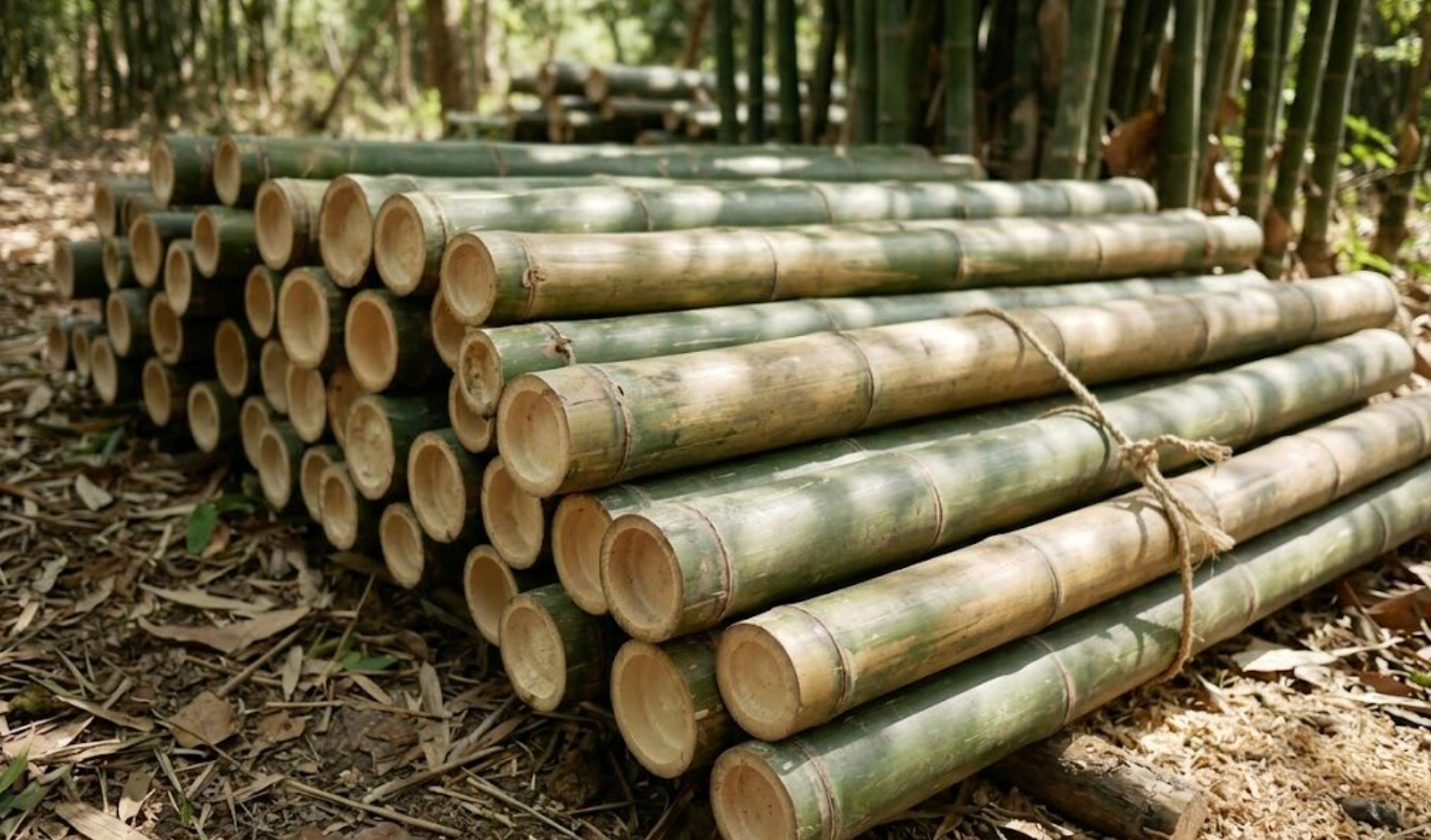
Created by Jeremy Mansfield First published on Sourceable here  Not many people have realised we have moved on from tiki-bar bamboo poles. Engineered bamboo is now a construction product. It can be used in mainstream building, not just furniture, screens and holiday-deck aesthetics.
By looka_production_140421591 • August 5, 2026
Why Speed Matters: The Time Value of Carbon in Decarbonisation
By looka_production_140421591 • July 28, 2026
Persistent Blind Spots: Refrigerants Are Still Hiding in Plain Sight – 2026 Update
By looka_production_140421591 • July 22, 2026
Commissioning: It’s in Your A5 Footprint – Here’s Why It Matters
By looka_production_140421591 • July 22, 2026
Could Australia Become a Dumping Ground for Refrigerants? (May 2026 Update)
By looka_production_140421591 • May 14, 2026
Construction Emissions Intensity: The Case for Operational Control A5 Boundary Reporting Over Financial Control
By Jeremy Mansfield • March 16, 2026
Why Australia’s net zero plan needs fast-growing biobased partners
By Jeremy Mansfield • March 16, 2026
Beyond Greenwashing: Protecting Fair Competition and Ethical Supply Chains in the Transition to Net-Zero
By Jeremy Mansfield • March 16, 2026
Why Energy Efficiency In Construction Matters 
January 26, 2026
Timber Needs Its Biobased Bedfellows: Why the Fastest Path to Decarbonising Construction is a Family Affair
By looka_production_140421591 • August 9, 2025
Unseen and Unaccounted For: Closing the Refrigerant Gap in Decarbonisation / Net Zero Strategies
By looka_production_140421591 • July 12, 2025
Bamboo: Unlocking Climate Solutions with Australia’s Sustainable Finance Taxonomy
By looka_production_140421591 • May 29, 2025
Accelerating the Transition to Fossil Fuel-Free Construction Mansfield Advisory Pty Ltd 205 followers  May 27, 2025 By Jeremy Mansfield OAM , Mansfield Advisory Pty Ltd Introduction The construction industry accounts for 40% of global carbon emissions, with a significant portion stemming from onsite activities and embodied carbon in materials [1]. In Australia, where infrastructure and buildings are key economic drivers, the sector’s emissions—particularly from construction processes (A5 emissions)—present both a challenge and an opportunity. Fossil fuel-free construction, which eliminates fossil fuels from onsite energy, machinery, transportation, and materials, is a critical step toward net zero by 2050. At Mansfield Advisory, we are committed to driving this transformation. Drawing on insights from ASBEC’s Our Upfront Opportunity report [1], Infrastructure Australia’s Embodied Carbon Projections for Australian Infrastructure and Buildings [2], the NABERS Embodied Carbon framework [3], and the C40 Clean Construction Accelerator, this article outlines the path to fossil fuel-free construction. It’s a call to action for government and industry to collaborate on policies and practices that will reshape how we build. What is Fossil Fuel-Free Construction? Fossil fuel-free construction eliminates fossil fuels across onsite activities (A5 emissions under EN15978), focusing on four key areas: Energy Sources : Powering construction sites with onsite or offsite renewable energy like solar, wind, or hydropower. Machinery : Using renewable electricity, low-carbon liquid fuels or renewable hydrogen to power machinery and equipment, instead of diesel, LPG or gasoline. Transportation : Deploying electric or low-carbon liquid fuel vehicles for moving materials and workers. Materials : Prioritising low-carbon options that minimise fossil fuel use in production.
By looka_production_140421591 • April 30, 2025
Could Australia Become A Dumping Ground for Refrigerants?
By looka_production_140421591 • April 30, 2025
The Emerging Fourth Green Shade: Beyond Greenwashing
By looka_production_140421591 • April 30, 2025
Three Shades Of Green You Don't Want To Be Tarnished With
By looka_production_140421591 • April 29, 2025
NZ Seize the Day: Lessons from New Zealand's Refrigerant Management for Australia.
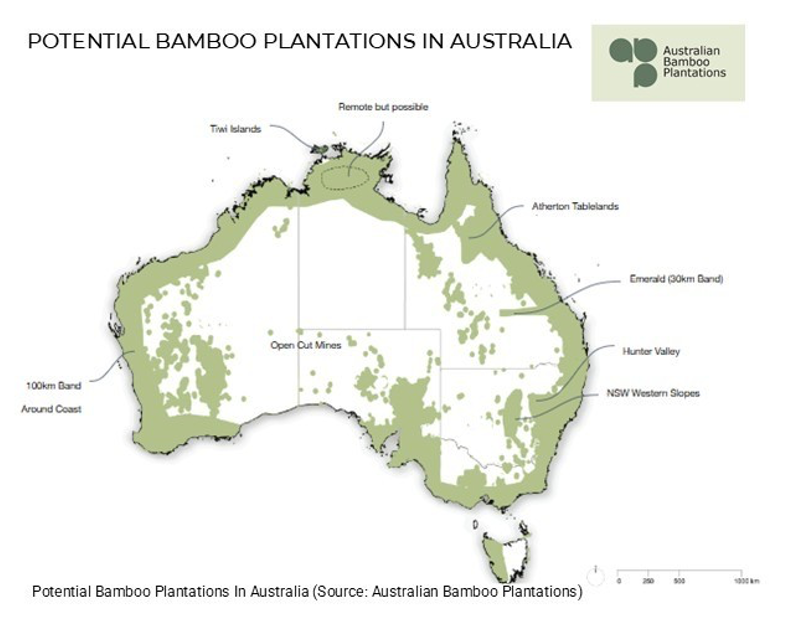
A map of potential bamboo plantations in australia
By looka_production_140421591 • April 29, 2025
Bamboo: Australia’s Untapped Ally for Sustainable Growth and Innovation
A road going through a forest on a foggy day
April 29, 2025
Blind Spots on the Road to Net-Zero: Australia’s Refrigerant Reporting Gaps