Persistent Blind Spots: Refrigerants Are Still Hiding in Plain Sight – 2026 Update
July 13, 2026
By Jeremy Mansfield OAM Mansfield Advisory Pty Ltd
Introduction
In June 2025, my article Blind Spots on the Road to Net-Zero (featured in Ecolibrium) highlighted how Australia’s refrigerant reporting rules were allowing thousands of tonnes of refrigerant gases to remain invisible. Twelve months later, the Australian Sustainability Reporting Standard (ASRS) is well underway for Group 1 and about to commence for Group 2 entities. The blind spots have not been closed. They have been reaffirmed, with the 2026 amendments to the National Greenhouse and Energy Reporting (NGER) scheme now confirmed, and no changes to refrigerant reporting following the recent consultation on proposed updates.
Australia’s refrigerant bank contained an estimated 55,000 metric tonnes in 2022 and is projected to grow to over 80,000 metric tonnes by 2035 (per Cold Hard Facts 4). The contained CO₂e, however, is expected to decline by 20 per cent, from approximately 100 million tonnes in 2022 to 79 million tonnes in 2036.
Yet most refrigerants used in split systems, rooftop units, and mobile refrigeration are still not captured in current reporting. Without full lifecycle visibility, asset owners risk both under-reported emissions today and material future liabilities tomorrow.
This follow-up article explains why these reporting blind spots remain and what needs to be done to address this persistent gap in accounting for the refrigerants in use.
Why NGER Thresholds Are Now Outdated
The ASRS adopted the NGER scheme by allowing in-scope entities to use NGER methodologies to measure their Scope 1 and Scope 2 greenhouse gas emissions. However, entities not required to report under NGER are supposed to use the GHG Protocol approach for ASRS reporting.
NGER requirements only capture individual HVAC systems with a unit refrigerant charge exceeding 100 kg and a Global Warming Potential (GWP) greater than 1000 (using the older 2007 AR4 values). In simple terms, GWP measures how much heat a greenhouse gas traps in the atmosphere compared with the same amount of carbon dioxide over 100 years. Australia’s rules still rely on these older GWP figures, even though newer science shows many refrigerants have a higher climate impact. There are also no facility, portfolio or fleet-wide cumulative thresholds defined in NGER or ASRS.
Early ASRS 'Group 1' Company reports show refrigerant disclosures that are relatively high-level, with no details on thresholds included in the accounting of Scope 1 emissions. In fact, the GHG Protocol Corporate Standard states that if your organisation owns or controls the cooling or refrigeration equipment, any resulting emissions from refrigerant leaks are classified as Scope 1 (Direct Emissions) and must be accounted for and reported.
The GHG Protocol emphasises relevance and inventory completeness. If a source is material to your corporate carbon footprint, it cannot be excluded regardless of size. The GHG Protocol also offers a standardised HFC Tool that uses a mass-balance approach to calculate emissions based on the equipment’s starting charge, maintenance charges added, and the amount recovered at the time of disposal.
The use of NGER methodologies creates a clear tension:
- Commonwealth entities and the APS use NGER to maintain continuity with Australia’s national carbon accounts and government operations targets (such as the APS Net Zero 2030 target). This includes the specific per-unit thresholds in NGER (100 kg charge and GWP > 1000) that were originally designed for large industrial point sources.
- These same thresholds have not been updated and now limit broader accounting of refrigerant emissions across distributed assets, building portfolios, government operations, and transport fleets.
- This approach conflicts with the GHG Protocol, which requires full inventory completeness. If your organisation owns or controls the cooling or refrigeration equipment, refrigerant leak emissions are Scope 1 and must be accounted for regardless of size.
- Without accounting for all refrigerants (beyond current thresholds), it is difficult to make credible absolute or net zero claims, as a material source of Scope 1 emissions remains unaddressed or understated.
This creates a significant opportunity to improve visibility by tracking total refrigerant use in transport fleets and mobile refrigeration systems below current NGER thresholds. As Australia updates its emissions reporting to align with the GHG Protocol’s focus on complete inventories, it would enhance decision-making and responsible refrigerant management. However, this shift deviates from current practices based on NGER thresholds.
Global Leaders Are Moving on Full Lifecycle Accountability
One important difference stands out when comparing Australia’s approach with international approaches to refrigerants. Australia already has a structured reporting framework through NGER and ASRS. However, it focuses mainly on reporting thresholds, when refrigerant emissions must be included in Scope 1 inventories. Leading international jurisdictions have taken a different path with robust operational leak management and equipment stewardship rules. These require mandatory leak detection, repair timelines, recordkeeping and recovery at much lower equipment charge sizes. The goal is to actively minimise actual releases, not just report them.
While Australia has yet to embrace comparable operational requirements for smaller distributed systems, other jurisdictions are tightening thresholds and demanding full lifecycle visibility:
- US EPA AIM Act (effective 2026): Mandatory leak detection, repair, and recordkeeping rules apply to most appliances containing ≥ 6.8 kg (15 lb) of HFC refrigerant with GWP > 53. This covers both stationary equipment and refrigerated transport. (Note: These provisions may be subject to change following shifts in EPA administration.)
- California CARB Refrigerant Management Program (RMP): Facilities with the largest refrigeration systems containing >22.7 kg (50 pounds) of high-GWP refrigerant must register, conduct periodic leak inspections, promptly repair leaks, and maintain on-site service records. Retail food chains also face portfolio-level weighted-average GWP tracking and cumulative reduction targets.
- EU F-Gas Regulation 2024/573: Leak-check obligations apply at low CO₂-e thresholds: 10 t CO₂e for HFCs (equivalent to roughly 5 kg of R410A or 15 kg of R32), with mandatory certified recovery at end-of-life for stationary systems and for mobile refrigeration on trucks and trailers.
These jurisdictions enforce accountability from installation through leaks to end-of-life, while Australia has yet to define equivalent requirements.

Australia’s Refrigerant Reporting Guidance Gaps – The Full Lifecycle Gap
Refrigerant lifecycle – where the current blind spots sit (from Blind Spots on the Road to Net-Zero, 2025)

Leaving the embodied emissions for a future article, the problems run much deeper than just an inventory issue.
- In-Use Leaks (Scope 1): Even for systems that must be reported, default leakage rates may be used, thereby limiting actual measurement, and no digital tracking is required. Systems with <100 kg refrigerant charge per unit or using lower-GWP refrigerants (≤ 1,000) are defined as “sub-threshold” and contribute zero to reported emissions, even though they form a significant part of Australia’s refrigerant bank.
- End-of-Life Releases (Scope 3): There is no dedicated guidance or emission factors for the decommissioning/destruction of refrigerants under Australia’s greenhouse gas reporting framework. When equipment is retired, potential venting goes largely untracked and unverified.
- Emerging PFAS Risks in the Refrigerant Lifecycle: The blind spot extends into long-term environmental liabilities. Many fluorinated refrigerants, especially HFO “low-GWP” alternatives replacing HFCs, degrade into trifluoroacetic acid (TFA), a persistent PFAS “forever chemical.” Leaks and improper end-of-life handling accelerate contamination risks.
In his recent LinkedIn article, Freeze Frame – Waiting for Twenty Years, Peter James rightly calls out the two-decade delay in adopting natural refrigerants and the risks of repeating the same mistakes with HFOs. Equally critical, however, is ensuring we maintain strict containment of the existing refrigerant bank throughout the transition.
The Green Building Council of Australia (GBCA) and AIRAH highlighted these concerns in their November 2025 paper Freeze Frame: Refrigerants as Long-Term Building Infrastructure. The paper warns of significant environmental, regulatory, and financial risks posed by synthetic refrigerants and urges a faster shift to natural alternatives.
Recently, the Australian Government announced it has included HFCs and certain HFOs on the IChEMS 2026–27 workplan. New restrictions on use and pre-charged equipment could be finalised by mid-2027. Yet integrated guidance for asset owners on inventory, recovery and PFAS risk management remains a gap.
This lack of lifecycle visibility leaves gaps in containment management, transition planning, and future liability assessment.
Real-World Impacts for Asset Owners and Transport Fleets
A few years ago, Adrian Bukmanis wrote about this shift and discussed how the emissions profile of buildings and portfolios changes as operational energy use decarbonises. He showed that as renewable energy becomes predominant and gas is phased out, fugitive Scope 1 emissions from refrigerants effectively become the key remaining legacy operational emissions challenge. We are now seeing this play out in property portfolios.
David Pallin from Mirvac highlighted this at the recent GBCA workshop. As Mirvac transition away from natural gas through electrification, the share of refrigerants in their Scope 1 emissions increased significantly, from 4.3% in FY23 to 11.4% in FY24. This reveals an effect that many Australian asset owners and transport fleet operators will soon face. However,

For transport fleets and cold chain operators, the issues are compounded by unclear Scope 3 accounting for third-party logistics. Future PFAS liabilities and potential stranded assets add another layer of unquantified risk. Insurers may increasingly scrutinise refrigerant usage and management, particularly as PFAS-related exclusions become more common.
Proactive and Responsible Refrigerant Management
Sophisticated asset owners and fleet operators do not need to wait for policy to catch up. It is difficult to make credible absolute or net-zero claims without fully accounting for all refrigerants, regardless of the reporting framework's thresholds. At the same time, the phase-down creates another PFAS-related challenge that is not solved by focusing solely on the climate or GWP risks.
Voluntary Steps You Can Take Now
- Commission a full portfolio or fleet-wide refrigerant inventory (beyond NGER thresholds).
- Implement digital lifecycle registers with actual leak measurement.
- Establish end-of-life recovery protocols.
- Plan transition to natural refrigerants (CO₂, ammonia, hydrocarbons) to address both GWP and PFAS risks.
Policy Recommendations
- Introduce cumulative/facility and portfolio-level thresholds.
- Lower or remove the outdated per-unit 100 kg + GWP >1000 rule.
- Provide dedicated NGA Factors guidance for end-of-life releases.
- Integrate PFAS/TFA considerations and align NGER/ASRS more closely with GHG Protocol expectations.
Time to Take Action
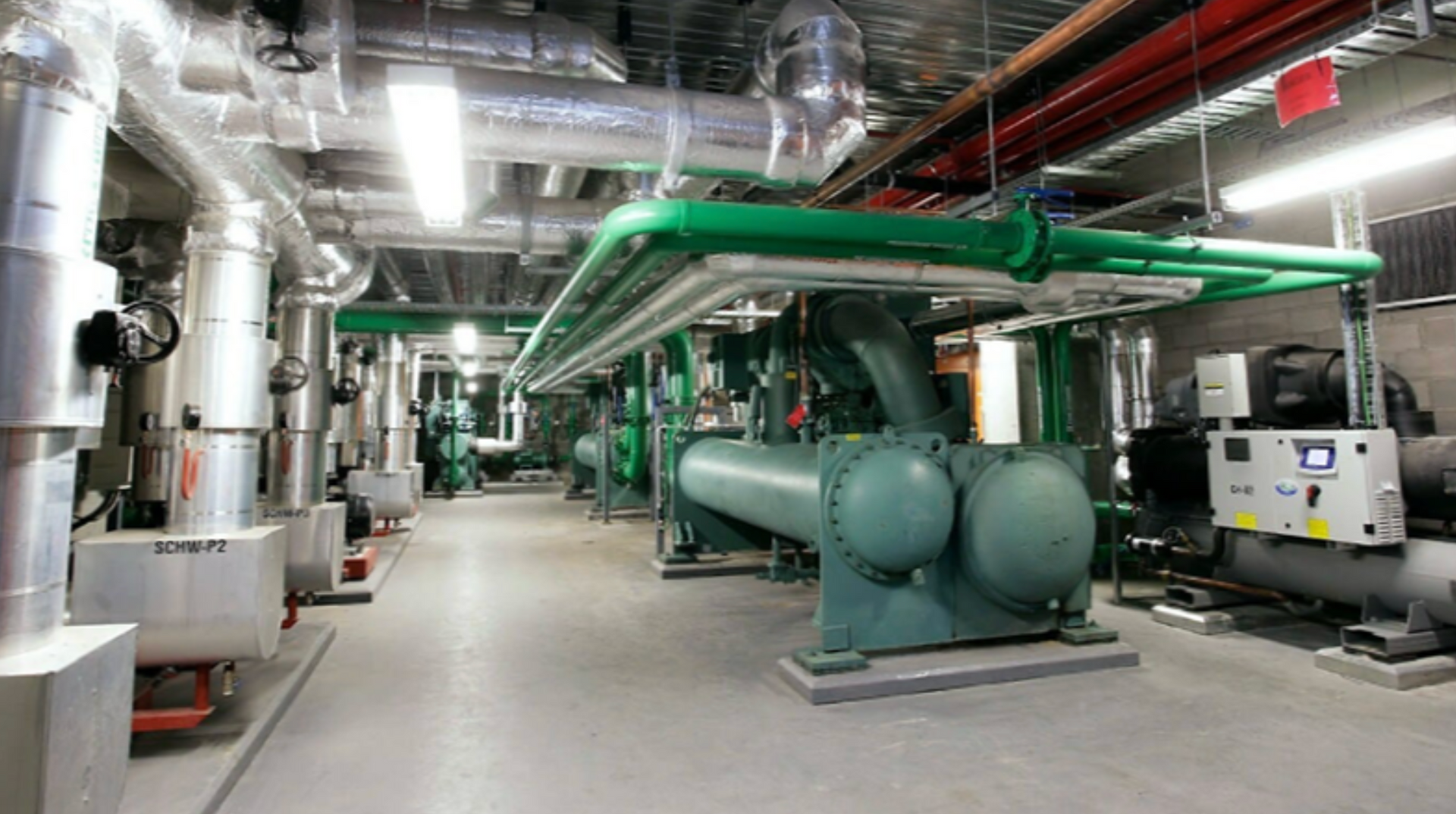
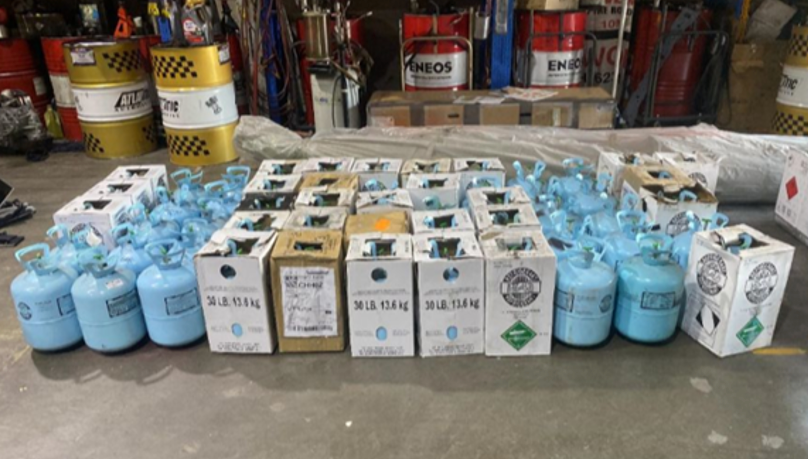
Refrigerants are not hiding. They are sitting in plain sight on rooftops, sides of buildings, in plant rooms, and inside transport fleets across Australia. Accurate lifecycle accountability is no longer optional for credible net-zero strategies in the built environment and transport sector.
Asset owners and fleet operators who move voluntarily today will be better prepared when regulatory tightening inevitably catches up. They will also carry significantly lower risk when presenting claims to investors, tenants, and regulators.
The GBCA Freeze Frame paper is a timely wake-up call: GWP is no longer enough. Whole-life-cycle assessment must include persistent chemical pollution.
I hope this update contributes to a more robust conversation on closing these persistent gaps in managing Australia’s refrigerant bank. Reach out if you’d like to discuss practical solutions for responsible refrigerant management.
Feedback and discussion are always welcome.