Why Energy Efficiency Must Be Central to Decarbonising Diesel-Dependent Equipment Sectors


January 5, 2026


Australia’s construction, infrastructure, and off-road industries rely heavily on diesel fuel, which contributes significantly to the nation’s emissions. The government’s fuel tax credit scheme, designed to support these sectors, now costs over $15 billion each year. While progress is being made with electrification pilots, low-carbon fuel experiments, and efforts to reduce carbon in building materials, one crucial approach is being overlooked: making better use of the fuel we already consume. Without focusing on this, we’re wasting valuable resources and slowing our journey to net zero emissions.


The Challenge: Diesel’s Stubborn Grip on Construction


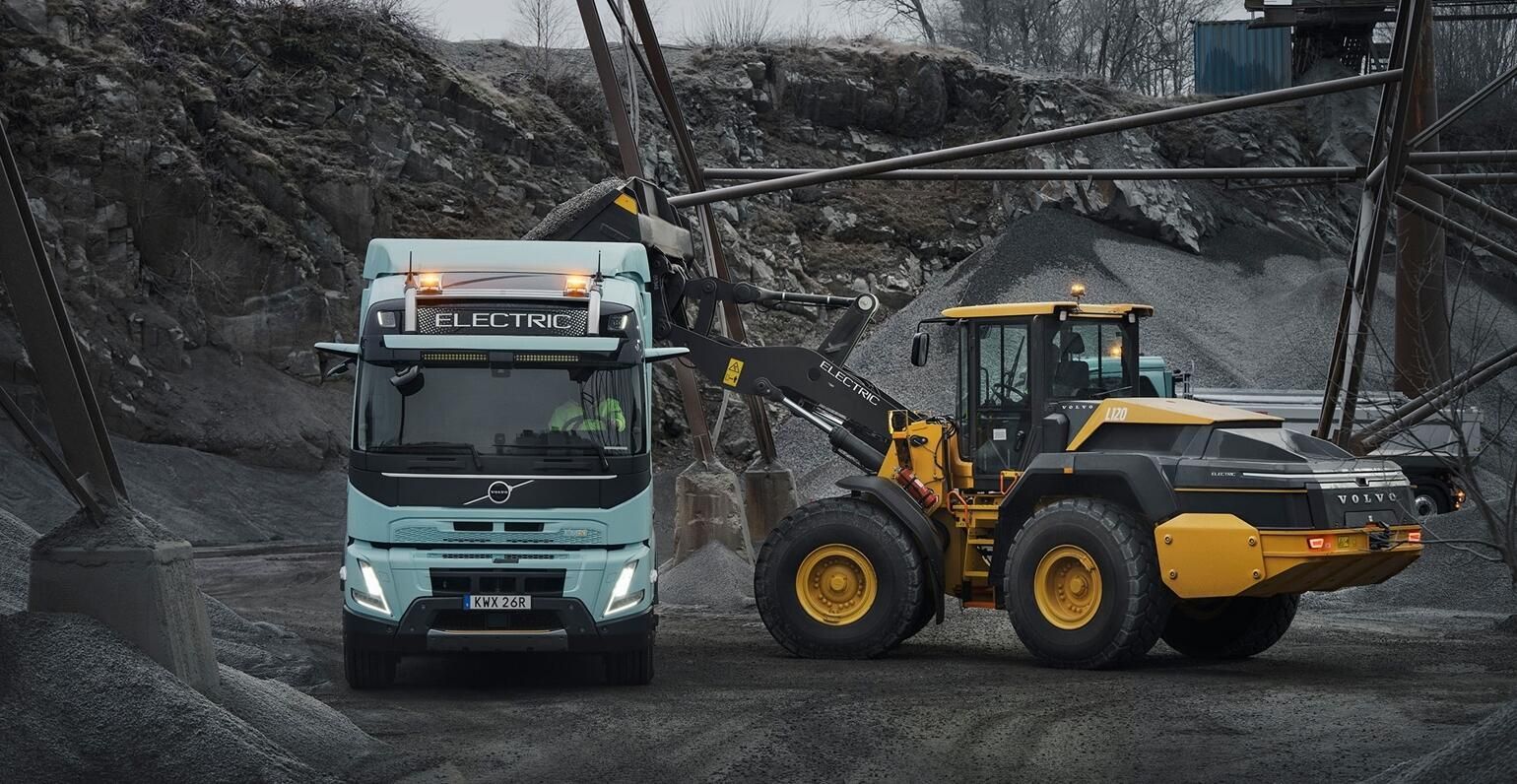
According to Infrastructure Australia’s 2024 projections, the construction sector could produce between 37 and 64 million tonnes of carbon dioxide equivalent (Mt CO₂e) annually through 2026–27. This comes from on-site machinery like dozers, loaders, and excavators, which work tirelessly during digging, pouring, and grinding phases, alongside the materials used. Estimates suggest these activities burn 7 to 10 billion liters of diesel each year, a figure subsidized by tax credits but largely ignored in plans to cut emissions.


The Efficiency Advantage: Making Every Drop Count


Upgrading to modern engines can transform how we use diesel, offering clear benefits for businesses and the environment. Consider the following advantages:

  • Significant Fuel Savings: Engines meeting EU Stage V or US Tier 4 Final standards reduce fuel consumption by 20 to 35 percent, thanks to simpler improvements like better combustion. This means less fuel is needed for the same work, cutting costs over time.
  • Quick Return on Investment: Switching from older Tier 2 or 3 engines—some still imported—can save enough money to cover upgrade costs in just 1 to 2 years, making it a practical choice for companies.
  • Amplified Impact with Alternatives: When paired with a 20 percent cut from biodiesel, the savings grow because the engine uses 30 percent less fuel to begin with, making greener fuels more effective.


This approach provides a practical, no-regrets foundation for deeper emissions reductions, proving efficiency is a win-win strategy.


Additional Co-Benefits: Cleaner Air and Healthier Communities


Beyond cutting carbon emissions, newer standards also reduce harmful pollutants like PM2.5 and nitrogen oxides (NOx), tiny particles and gases that can penetrate deep into the lungs and are linked to serious health issues such as lung cancer, heart disease, and respiratory problems. Construction workers face higher exposure on job sites, and nearby urban communities are affected too, especially in densely populated areas. In response, London has introduced strict rules, mandating Stage IV engines by 2025 and upgrading to Stage V by 2030 to protect public health. In Australia, Western Australia has guidelines to limit diesel exposure in mining operations, but no similar nationwide rules exist for construction—making the case for cleaner, more efficient equipment even stronger.


A Proven Hierarchy We’re Missing


Around the world, experts follow a clear decarbonisation hierarchy to tackle emissions effectively (see Figure 1). It starts with avoiding unnecessary emissions through smart design and reuse, such as planning projects to minimise waste. Next, it emphasises reducing fuel use by upgrading machinery, like adopting Stage V engines that save 20–35 percent. Then, it suggests switching to low-carbon alternatives such as electrification or sustainable fuels. Finally, it allows for compensating any remaining emissions with high-quality offsets. This approach, supported by the International Energy Agency, C40 Cities, and the World Green Building Council, ensures the best results. Unfortunately, Australia often jumps straight to switching fuels without prioritising reductions, missing a key opportunity.
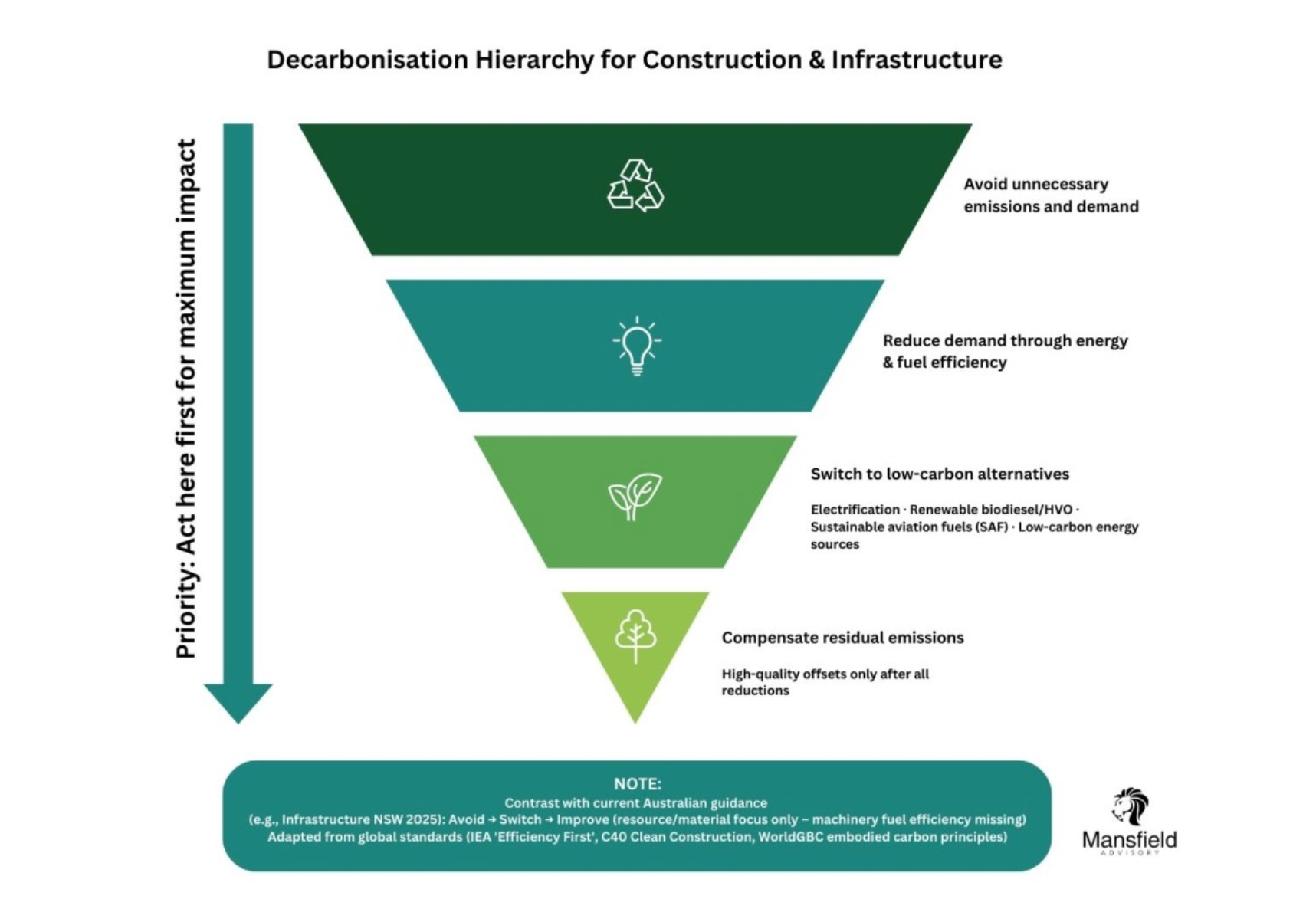


Figure 1: Decarbonisation Hierarchy for Construction & Infrastructure. A prioritised approach to emissions reduction, highlighting effieincy as a critical step in reducing demand for fuels.


Global Benchmarks: Efficiency as a Core Strategy Elsewhere


Internationally, efficiency is proving its worth in meaningful ways. The GlobalABC’s 2024–2025 Report highlights how mandatory codes and equipment retrofits have, for the first time, separated construction growth from rising emissions by improving how resources are used. Cities like Oslo, Helsinki, London, and Amsterdam—part of the C40 network—combine resource efficiency with zero-emission mandates, with Oslo requiring fossil-free construction sites since 2019 and planning fully zero-emission public sites by 2025. The EU’s Stage V standards, in place since 2019, improve fuel use while reducing pollutants, prompting cities like London to tighten machinery rules. Meanwhile, the IEA and WorldGBC roadmap shows efficiency can cut embodied and operational emissions by 20 to 50 percent. In contrast, Australia focuses heavily on material and fuel changes, neglecting on-site fuel optimisation.


Australia’s Missed Opportunity


Reports from the Australia Institute and the Clean Energy Finance Corporation call for reforming subsidies and switching to alternative fuels, but they don’t link these incentives to efficiency upgrades, which could maximise their impact. Infrastructure NSW’s 2025 Roadmap prioritises low-carbon fuels and materials, yet overlooks the fuel savings possible with better engines that could enhance those efforts. The Heavy Vehicle Industry Australia supports improving fleet efficiency, but this focus hasn’t reached off-road construction equipment guidance. Federal plans, including the 2025 Transport Roadmap, address on-road and material emissions but leave out off-road diesel opportunities, risking an influx of outdated machinery.


Overcoming Barriers and Moving Forward


Some worry that upgrading equipment is too expensive, but the evidence suggests otherwise. Here’s how efficiency can work in practice:


  • Cost-Effective Upgrades: The 20–35 percent fuel savings from modern engines can cover costs in 1 to 2 years, offering a strong financial incentive.
  • Global Success Stories: Cities like Oslo and the EU’s Stage V adoption demonstrate how efficiency smooths the transition to low-carbon solutions.
  • Actionable Steps: We recommend tying fuel tax credits to Stage V compliance, setting national machinery benchmarks, requiring better diesel usage reporting, and learning from C40 cities and GlobalABC with retrofits and zero-emission goals.
  • Bridging to the Future: While electric technology is likely the endgame for decarbonisation of construction equipment, optimising fuel use now provides a critical interim step, reducing emissions and costs until electric solutions are fully scalable.


Policymakers and industry leaders must act now to make efficiency the foundation of our decarbonisation efforts. This approach will unlock cost savings, improve air quality, and accelerate our path to net zero.


References


  1. Australian Taxation Office. (2025). Fuel Tax Credits Scheme Annual Report 2024–2025. Canberra: ATO.
  2. Department of the Treasury. (2024). Budget Paper No. 2: Budget Measures 2024–2025. Canberra: Australian Government.
  3. Infrastructure Australia. (2024). Embodied Carbon Projections for Australian Infrastructure and Buildings 2024. Sydney: Infrastructure Australia.
  4. Australian Government. (2024). Australian Petroleum Statistics 2023–2024. Canberra: Department of Industry, Science and Resources.
  5. Atlas Copco. (2023). Stage V Technical Guide: Engine Efficiency and Emissions. Nacka: Atlas Copco.
  6. UK Health and Safety Executive. (2023). Diesel Engine Exhaust Emissions in Construction: Health Risks. London: HSE.
  7. Safe Work Australia. (2024). Diesel Exhaust Exposure Guidelines. Canberra: Safe Work Australia.
  8. Greater London Authority. (2024). Non-Road Mobile Machinery Low Emission Zone Policy 2025–2040. London: GLA.
  9. Western Australia Department of Energy, Mines, Industry Regulation and Safety. (2023). Diesel Emissions Management Guidelines. Perth: DEMIRS.
  10. International Energy Agency. (2024). World Energy Outlook 2024; C40 Cities. (2024). Clean Construction Programme Report; World Green Building Council. (2024). Net Zero Carbon Buildings Roadmap. Paris/London: IEA/C40/WorldGBC.
  11. Australia Institute. (2024). Subsidies and Sustainability: Reforming Fuel Tax Credits; Clean Energy Finance Corporation. (2024). Decarbonizing Heavy Industry Report. Canberra/Sydney: Australia Institute/CEFC.
  12. Infrastructure NSW. (2025). Decarbonising Infrastructure Roadmap 2025. Sydney: Infrastructure NSW.
  13. Heavy Vehicle Industry Australia. (2024). Transition to Low-Emission Fleets: Policy Submission. Canberra: HVIA.
  14. Department of Infrastructure, Transport, Regional Development, Communications, and the Arts. (2025). Transport and Infrastructure Net Zero Roadmap and Action Plan 2025. Canberra: Australian Government.
  15. International Council on Clean Transportation. (2021). Efficiency Technology Potential for Heavy-Duty Vehicles. Washington, DC: ICCT.
By looka_production_140421591 • October 5, 2026
By Jeremy Mansfield, 29 September 2026  Published on TheFifthEstate Australia has set itself two difficult tasks: build vastly more homes and cut the upfront carbon locked into the materials we use to build them. New analysis from Deloitte Access Economics suggests an Australian engineered bamboo industry could make a measurable contribution to both. By 2035, under the report’s high-growth scenario, Australia could produce enough engineered bamboo for the equivalent of around 16,600 homes a year and avoid around 430,000 tonnes of greenhouse gas emissions in that year, about 1.5 per cent of the built environment’s upfront embodied carbon. The report also estimates the construction sector could gain an average $111 million in additional value each year. So, what stands between that 1.5 per cent opportunity and the buildings we actually build? The gap between crop and construction Last January in The Fifth Estate , I wrote that Australia’s net zero settings still default to slow plantation cycles, and that public finance has no real home for fast-growing biobased materials. The Bamboo Breakthrough roadmap and the analysis now give investors something firmer to look at. A local engineered bamboo industry could be an $847 million a year market by 2035 under a high growth scenario. This would add about $906 million to GDP and support around 1840 jobs. About three-quarters of those jobs are in manufacturing. The material volume under the scenario is equivalent to about 250,000 cubic metres a year. However, Australia currently has no coordinated commercial plantation base. No domestic manufacturer of structural engineered bamboo. No deemed-to-satisfy path in the National Construction Code. Performance solutions can carry early projects, as they have done for mass engineered timber. Policy and funding frameworks were written around incumbent materials. Harvesting and manufacturing must move with the crop. One without the other does not work. Building the evidence base The first four years in the report’s pathway are about proving the product and taking risk out of delivery. That is now, not 2035. The first project is not a national hectare target. It is a pilot plantation with a named offtake, processing designed against that offtake, and Australian performance data so a certifier can say yes. Demonstration buildings using proven international products are part of that. They build demand and performance data while local plantations mature. It will take time to build the sovereign manufacturing capability and reliable supply chain to turn a crop into a construction product. The roadmap also identifies research needed to reduce risk, from farm-ready harvest methods to a carbon method that can account for selective harvest. A bamboo forest method idea has sat with the Department of Climate Change, Energy, the Environment and Water since June 2024, waiting for support to take it to an expression of interest. Soil carbon is a separate question. Baselines and how selective harvest that leaves the root system in the ground should be treated still have to be worked through with the Clean Energy Regulator. Beyond the bamboo beam There are also research opportunities for other use cases. The report’s high growth case is not only about laminated lumber replacing glulam. A large share of the modelled abatement is engineered bamboo in place of medium density fibreboard (MDF) and other building products, with smaller plays in aluminium and steel. Fibre, panels, cladding, flooring and interior uses are part of that market. Combinations of bamboo fibres with other fast growing fibres already in Australian agriculture have not been taken far yet. That research is how more of the modelled industry becomes a product with a buyer. There is also a hybrid opportunity with timber. Engineered bamboo can sit in mixed systems, not only as a standalone product. That is useful where mills already handle wood fibre and want another feedstock, and where specifiers want a family of biobased materials rather than a single substitute. Recognising engineered bamboo in industry carbon tools is a separate task. Environmental product declarations (EPDs) exist, but NABERS embodied carbon does not yet include a category for engineered bamboo, and neither does EC3 or many other lifecycle assessment tools. That gap can be fixed, but it will not close automatically. The Clean Energy Finance Corporation (CEFC), the National Reconstruction Fund, Northern Australia Infrastructure Facility (NAIF), the Regional Investment Corporation and Housing Australia all sit close to housing supply, regional manufacturing, agriculture or embodied carbon. The question is whether a perennial grass that becomes an engineered beam can be recognised as a fit, rather than forced into a forestry or energy template that does not describe it. The investment case is there for anyone prepared to look at crop and processing together. That is the work from here, in 2026. Download the Bamboo Breakthrough roadmap .
By looka_production_140421591 • September 29, 2026
Created by Jeremy Mansfield First published on Sourceable here  Not many people have realised we have moved on from tiki-bar bamboo poles. Engineered bamboo is now a construction product. It can be used in mainstream building, not just furniture, screens and holiday-deck aesthetics.
By looka_production_140421591 • August 5, 2026
Why Speed Matters: The Time Value of Carbon in Decarbonisation
By looka_production_140421591 • July 28, 2026
Persistent Blind Spots: Refrigerants Are Still Hiding in Plain Sight – 2026 Update
By looka_production_140421591 • July 22, 2026
Commissioning: It’s in Your A5 Footprint – Here’s Why It Matters
By looka_production_140421591 • July 22, 2026
Could Australia Become a Dumping Ground for Refrigerants? (May 2026 Update)
By looka_production_140421591 • May 14, 2026
Construction Emissions Intensity: The Case for Operational Control A5 Boundary Reporting Over Financial Control
By Jeremy Mansfield • March 16, 2026
Why Australia’s net zero plan needs fast-growing biobased partners
By Jeremy Mansfield • March 16, 2026
Beyond Greenwashing: Protecting Fair Competition and Ethical Supply Chains in the Transition to Net-Zero
January 26, 2026
Timber Needs Its Biobased Bedfellows: Why the Fastest Path to Decarbonising Construction is a Family Affair
By looka_production_140421591 • August 9, 2025
Unseen and Unaccounted For: Closing the Refrigerant Gap in Decarbonisation / Net Zero Strategies
By looka_production_140421591 • July 12, 2025
Bamboo: Unlocking Climate Solutions with Australia’s Sustainable Finance Taxonomy
By looka_production_140421591 • May 29, 2025
Accelerating the Transition to Fossil Fuel-Free Construction Mansfield Advisory Pty Ltd 205 followers  May 27, 2025 By Jeremy Mansfield OAM , Mansfield Advisory Pty Ltd Introduction The construction industry accounts for 40% of global carbon emissions, with a significant portion stemming from onsite activities and embodied carbon in materials [1]. In Australia, where infrastructure and buildings are key economic drivers, the sector’s emissions—particularly from construction processes (A5 emissions)—present both a challenge and an opportunity. Fossil fuel-free construction, which eliminates fossil fuels from onsite energy, machinery, transportation, and materials, is a critical step toward net zero by 2050. At Mansfield Advisory, we are committed to driving this transformation. Drawing on insights from ASBEC’s Our Upfront Opportunity report [1], Infrastructure Australia’s Embodied Carbon Projections for Australian Infrastructure and Buildings [2], the NABERS Embodied Carbon framework [3], and the C40 Clean Construction Accelerator, this article outlines the path to fossil fuel-free construction. It’s a call to action for government and industry to collaborate on policies and practices that will reshape how we build. What is Fossil Fuel-Free Construction? Fossil fuel-free construction eliminates fossil fuels across onsite activities (A5 emissions under EN15978), focusing on four key areas: Energy Sources : Powering construction sites with onsite or offsite renewable energy like solar, wind, or hydropower. Machinery : Using renewable electricity, low-carbon liquid fuels or renewable hydrogen to power machinery and equipment, instead of diesel, LPG or gasoline. Transportation : Deploying electric or low-carbon liquid fuel vehicles for moving materials and workers. Materials : Prioritising low-carbon options that minimise fossil fuel use in production.
By looka_production_140421591 • April 30, 2025
Could Australia Become A Dumping Ground for Refrigerants?
By looka_production_140421591 • April 30, 2025
The Emerging Fourth Green Shade: Beyond Greenwashing
By looka_production_140421591 • April 30, 2025
Three Shades Of Green You Don't Want To Be Tarnished With
By looka_production_140421591 • April 29, 2025
NZ Seize the Day: Lessons from New Zealand's Refrigerant Management for Australia.
A map of potential bamboo plantations in australia
By looka_production_140421591 • April 29, 2025
Bamboo: Australia’s Untapped Ally for Sustainable Growth and Innovation
A road going through a forest on a foggy day
April 29, 2025
Blind Spots on the Road to Net-Zero: Australia’s Refrigerant Reporting Gaps