Why Speed Matters: The Time Value of Carbon in Decarbonisation
A tonne of carbon removed this decade is worth far more than the same tonne removed in 2045 or 2050.
That is the time value of carbon. We are not on a gentle glide path to net zero. We are racing a shrinking global carbon budget. Every extra year of high emissions locks in more warming that becomes harder, and in some cases impossible, to reverse. Early removals and early avoided emissions compound. Late ones do not.
The idea that carbon removed earlier has greater climate value is not new. Work by Arup (see Arup’s paper on the time value of carbon ) and others has already highlighted the importance of timing. What remains missing is a simple way for procurement, finance and policy to recognise that value in practice.
This matters because most of Australia’s current climate investment in land-based sequestration is still locked into slow-growing systems. Traditional softwood and hardwood plantations typically take eight years or more before they start sequestering meaningful amounts of carbon, and the first commercial harvest is often 25 to 30 years away. That timeframe is too slow for the decade we are in.

Bamboo’s fast-cycle advantage
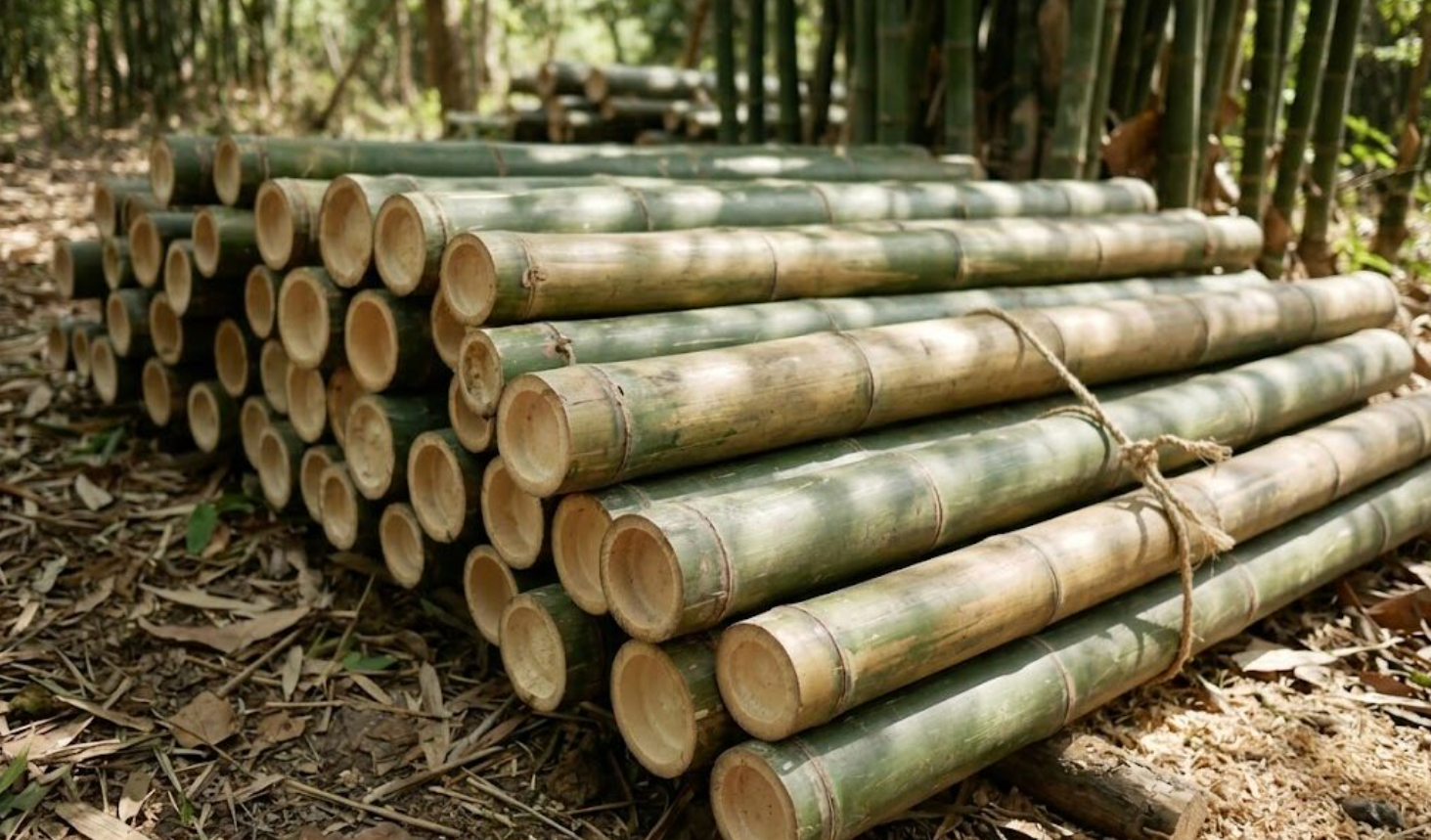
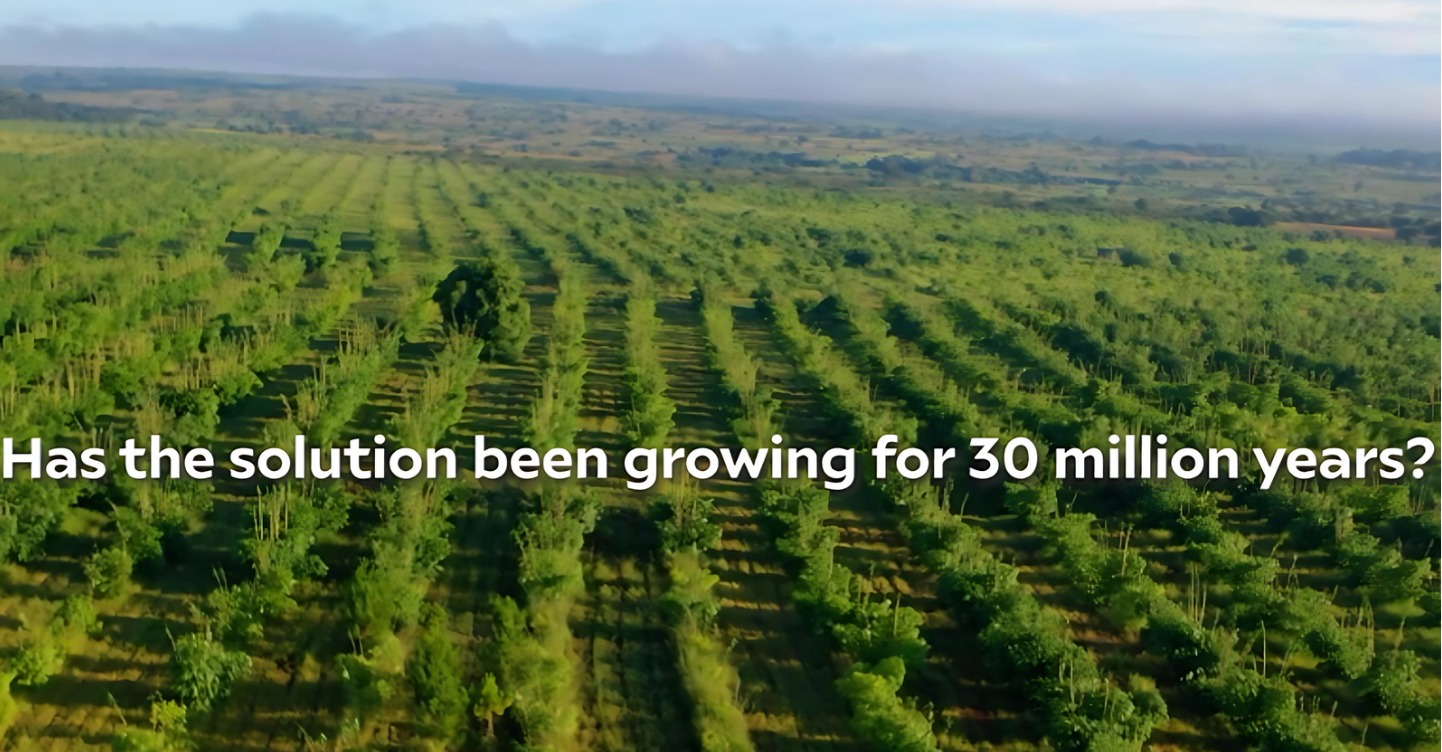
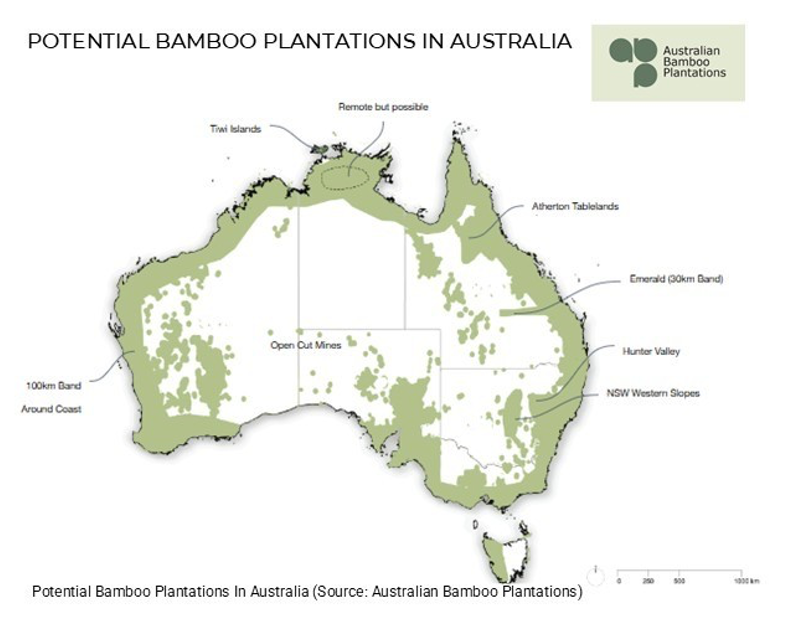
Well-managed bamboo plantations operate on a completely different cycle. They can sequester 12 to 25 tonnes of CO₂ per hectare per year and typically begin annual harvesting from year five. Over 30 years, the same land can deliver 25 or more harvests, significantly higher cumulative sequestration and material output than a single-cycle timber plantation.
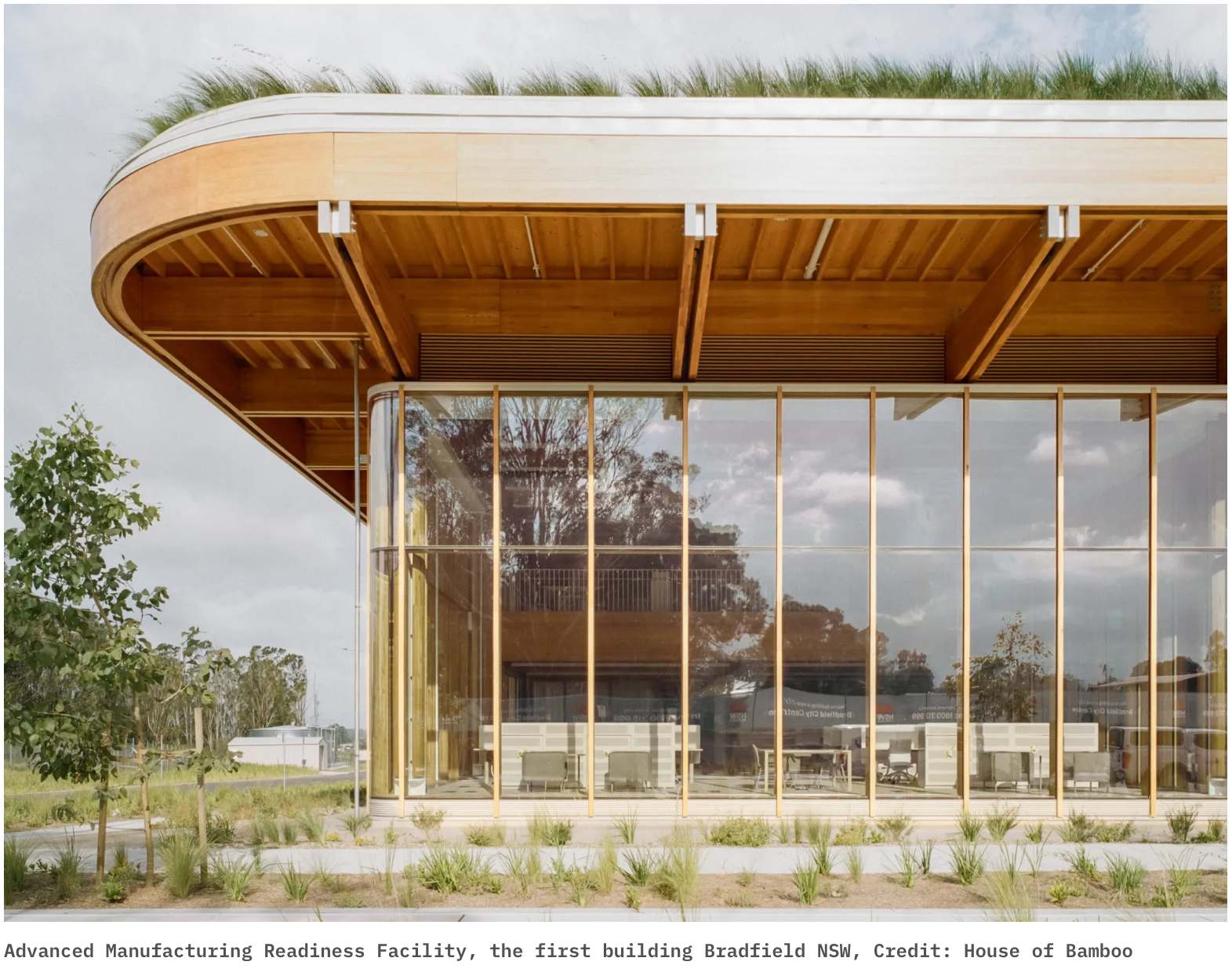
The climate benefits go beyond speed of growth. Engineered bamboo can offer relatively low embodied carbon compared with steel, aluminium and many concrete products, high biogenic carbon storage once used in buildings, and potential for soil carbon retention under perennial systems that do not require regular cultivation.
On the structural side, engineered bamboo can achieve strength grades in the F8 to F34 range. Its performance is closer to hardwood than softwood, and where it displaces softwood products, its higher strength-to-weight characteristics open the possibility of building more with less material. This still needs further validation across Australian applications and design codes, but the direction of travel is clear.
Because harvesting can begin within five years and continue annually, fast-cycle materials can also increase the physical supply of construction products this decade, at a time when domestic timber supply is under pressure from imports.
Taken together, these attributes offer a useful combination: earlier atmospheric carbon removal, storage in long-lived construction products, soil carbon retention, avoided emissions from higher-carbon materials, and a faster pathway to material supply and regional economic returns.
The funding and policy blind spot
Despite these advantages, most climate-aligned capital in Australia still appears to flow into slow-growing hardwood and softwood plantations. The broader family of fast-growing bio-based materials, bamboo, industrial hemp, straw, mycelium and others, remains largely overlooked by major initiatives, including the Australian Sustainable Finance Taxonomy and the Clean Energy Finance Corporation.
This is not an argument against planting trees. We need both fast and slow approaches. The problem is the extreme imbalance. Current funding models, risk frameworks and carbon methodologies are still built almost exclusively around traditional forestry timeframes and outcomes. Perennial crops that deliver earlier sequestration, repeated harvests, and construction-grade material sit outside most existing settings.
Until carbon methodologies, sustainable finance criteria and investment mandates properly recognise the time value of carbon, capital will keep flowing to the slower options by default.
A practical way to recognise speed
One reason the current imbalance likely persists is that most carbon metrics and sustainable finance criteria appear to treat biogenic carbon the same regardless of how quickly it is sequestered and renewed. A simple near-term indicator could help close that gap.
A Near-Term Carbon Sequestration Impact (CSI) metric would sit alongside existing GWP fossil and static biogenic carbon figures. It takes the gross stored biogenic carbon already declared in an EPD and adjusts it by the material’s typical rotation or regrowth cycle over a 10-year horizon:
CSI = Gross stored biogenic carbon × (10 / R)
Where R is the time (in years) required to regrow an equivalent quantity of carbon after harvest. For annual crops, R = 1. For conventional timber, R is the full rotation length; for selective annual-harvest systems such as mature bamboo, an effective R is used. This is calculated as 10 ÷ number of equivalent harvest cycles expected in the first 10 years. With first commercial harvest in year 5 and annual harvests thereafter, six cycles occur within the decade, giving an effective R of approximately 1.67.
The results below highlight which materials deliver more atmospheric drawdown in the critical next ten years. CSI is deliberately simple, uses data already reported in EPDs, and is intended as a screening and decision-support tool rather than a replacement for established lifecycle metrics. A simple approach has been used here. Testing alternative ways of weighting earlier versus later years reduced the absolute numbers but left the ranking of materials unchanged.
Illustrative CSI values:

Used together with existing metrics, CSI gives a clearer picture of near-term climate contribution, something current frameworks do not provide. The values above are illustrative. More sophisticated approaches are possible; the point I’m making is that recognising cycle speed changes the picture.
Conclusion
The next decade is the one that matters most. If we take the time value of carbon seriously, there is a case for broadening investment beyond slow-growing timber and giving more attention to the fast-growing bio-based materials that can deliver measurable impact this decade.
Bamboo and its fast-cycle relatives offer a practical way to sequester carbon now, store it in buildings, retain it in soils, substitute high-emission materials, and generate earlier economic and regional returns. Tools that make the speed of that contribution visible will help capital and policy move in the right direction.
The question for Australian climate finance, investors and policymakers remains straightforward: will we continue to back solutions that largely pay off after 2050, or will we finally support the materials that can move the needle in the decade we actually need them?
Related reading: Other articles on biobased materials and construction decarbonisation are available at mansfieldadvisory.com.au/articles.
Note: CSI is a proposed screening concept, not an established carbon accounting standard. The example values are illustrative and based on typical published data; actual results will vary by product, species, location and management.