Could Australia Become a Dumping Ground for Refrigerants? (May 2026 Update)
Mansfield Advisory Pty Ltd
First published on LinkedIn | 17 October 2024
Updated | May 2026
Cooling is a year-round necessity in Australia, driven by both summer heat and the constant operation of commercial refrigeration. That dependence makes refrigerants both a climate issue and a market-risk issue. As the global phase-down of high-GWP refrigerants accelerates, countries with slower product restrictions, weaker verification, or enforcement gaps can become attractive destinations for diverted, misdeclared, or illegal product. Since this article was first published in October 2024, that risk has become more concrete. Enforcement activity has intensified globally, organised criminal networks have become more sophisticated, and recent cases in Europe and the United States show how easily illegal refrigerants can enter legitimate supply chains. At the same time, Australia still has important gaps in verification, traceability, product controls, and end-to-end visibility across the refrigerant lifecycle.
Environmental and Health Impacts
Cooling demand is rising sharply. The Centre for Sustainable Cooling’s report The Hot Reality: The Urgent Need for Sustainable Cooling projects a potential 90% increase in global cooling-related electricity consumption by 2050, underscoring cooling’s growing role in energy demand and climate pressure. Cooling processes already account for around 7% of global greenhouse gas emissions, and that share could double by 2030 or even triple by 2100. In Australia, Cold Hard Facts 4 estimates that refrigeration and air conditioning equipment contributes about 12% of national greenhouse gas emissions. Of that total, around 11% comes from direct emissions, 8% from end-of-life releases, and 81% from indirect emissions. HFCs remain central to this challenge because they are widely used, have high global warming potential, and continue to be one of the fastest growing sources of greenhouse gas emissions globally.
PFAS-related concerns add a further layer of complexity. Some fluorinated alternatives have per- and poly-fluoroalkyl substance characteristics, raising questions about long-term environmental persistence and health impacts. While PFAS is a distinct policy issue, it complicates decisions about the sustainability of next-generation cooling technologies.
Research has linked PFAS exposure to a range of adverse outcomes, including liver damage, thyroid disease, reduced fertility, high cholesterol, obesity, and some cancers. These chemicals can enter the body through water, food, or air, and their persistence means they can accumulate over time in both people and ecosystems. That persistence is what makes PFAS relevant to the broader refrigerant transition debate.
Refrigerants and Scope 1 Emissions
Scope 1 emissions are direct greenhouse gas emissions from sources owned or controlled by a company. For refrigerants, they are primarily fugitive emissions such as leaks during operation, maintenance, and decommissioning. These emissions are often underestimated in broader climate discussions, yet they are central to Australia’s emissions profile and to how companies manage refrigeration and air-conditioning risk.
Mandatory Emissions Reporting: Australia's New Framework
Australia’s mandatory climate disclosure framework, commencing from 1 January 2025 for relevant entities, places refrigerant management under greater scrutiny:
- Scope 1: Entities must better track and disclose refrigerant leaks, increasing pressure to improve containment, maintenance, and adoption of lower-GWP alternatives.
- Scope 2 and Scope 3: These categories capture emissions linked to purchased energy and the wider value chain, including refrigerant production, disposal, and the downstream impact of equipment sold into the market.
The Rise of Illicit Refrigerant Trade
The Kigali Amendment has accelerated the global phase-down of high-GWP refrigerants, and many jurisdictions have responded with quotas, product bans, leakage controls, and tighter reporting rules. Europe has strengthened its F-gas regime, the United States has expanded enforcement under the AIM Act, and Australia has introduced its own HFC phase- down through a quota system. Whenever legal supply tightens and price differentials widen, illegal trade becomes more attractive.
That dynamic is now well established. Smugglers exploit quota constraints, mislabelling, counterfeit blends, and uneven enforcement to move refrigerants into markets where controls are weaker or demand for legacy product remains. The result is a growing black market that undermines climate policy, distorts competition, and puts legitimate supply chains at risk.
Recent events and actions:
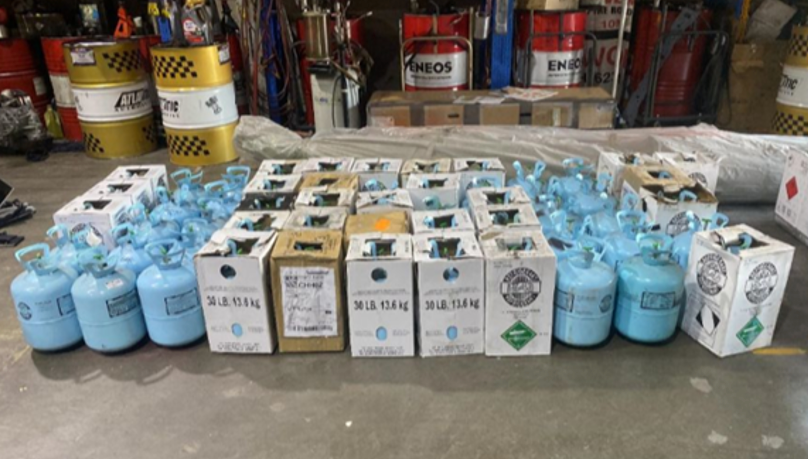
- United States: Enforcement has become more rigorous with the introduction of the AIM Act. Update: In March 2025, William Randolph Hires, CEO of Extreme Residential (Georgia), was charged with importing 500 R-410A cylinders from Peru without authorisation. He pleaded guilty on 9 February 2026 — the first prosecution of a corporate executive under the AIM Act — with sentencing scheduled for 17 June 2026. Separately, an individual was sentenced on 10 February 2026 in Brownsville, Texas, for smuggling 17 cylinders of mixed HFCs (including R-410A, R-32, R-134a and R-125) concealed in a vehicle at the border; the offender had prior fines for similar attempts. These cases highlight the cross-border nature of the trade and the persistent incentive created by price differentials, with methods such as vehicle concealment that mirror risks for Australian borders.
- European Union: Despite having stringent regulations, the EU faces challenges with illegal HFCs primarily entering through Bulgaria from Turkey and China. The EIA has pointed out ongoing issues, with Romania and Bulgaria as key entry points. Smugglers employ sophisticated methods like mislabelling and exploiting corruption to bypass enforcement.
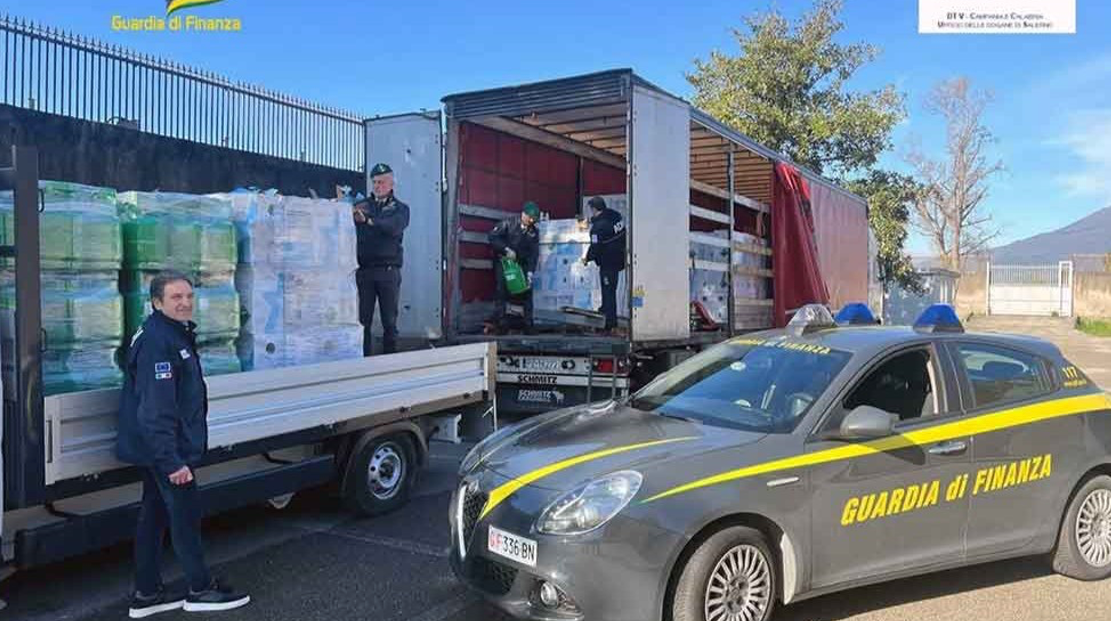
- Enforcement Actions: Significant seizures have occurred, like in the Netherlands and Italy, where large quantities (40 tonnes in both instances) of illegal refrigerants were intercepted. These actions demonstrate the scale of the illegal trade and the efforts to combat it. Update: More recently, a thousand cylinders containing around 14 tonnes of illegal HFC were seized in Italy (March 2025).
Adaptation of Criminal Networks: Criminals adapt quickly to enforcement measures by altering their strategies, such as changing labels or using disposable containers. Spain has become a hotspot for online sales of illegal HFCs. Update: Romania uncovered a cross-border smuggling network in February 2025 operating along the Turkey-EU route.
Global Crackdown (2025–2026):
- Operation Demeter XI (2025): Coordinated by the World Customs Organisation, this five-week global operation involving 120 customs administrations resulted in 409 seizures of illicit environmental commodities, including 168 tonnes of illegal refrigerants.
- Asia-Pacific Seizure: Hong Kong intercepted 1,300 cylinders (valued at approximately US$822,000) mis-declared as laminate flooring in November 2025, highlighting Asia-Pacific smuggling routes that could extend to Australia.
- United States Auctions Seized HFCs (February 2026): The U.S. Treasury and Customs auctioned 30,500 pounds of confiscated refrigerants (including R-410A, R-404A, R-134a, and R-32) to licensed bidders under AIM Act rules, preventing re-entry of illegal stocks and mitigating emissions equivalent to over 28,000 metric tons of CO₂e. This post-seizure management approach could serve as a model for Australia.
- WCO Illicit Trade Report (Published February 2026): Covering 2025 data, the report documents a surge in environmental smuggling, with Figure 37 illustrating global trafficking routes potentially positioning Australia as a destination or transit point from high-risk origins like China and Southeast Asia. No major refrigerant seizures were reported in Australia during this period, but enhanced border controls (e.g. Australia’s July 2025 ban on high-GWP small AC systems) may help mitigate emerging threats.
2026 Update: Europe’s Black Market Thrives as Australia’s Enforcement Gaps Remain
Since the original publication of this article in October 2024, the global illicit trade in high- GWP refrigerants has become more sophisticated, more embedded in legitimate supply chains, and more relevant to Australia’s risk settings. Undercover investigations and enforcement actions continue to show how quota systems, price differentials, and weak verification can be exploited — precisely the combination of conditions that this article identified as a risk for Australia.
In April 2026, the Environmental Investigation Agency released Fakes, Fraud and F-gases, detailing how organised crime networks in Italy are allegedly supplying illegal refrigerants into legitimate supply chains, including major retailers, manufacturers, and public infrastructure. The practices described include quota breaches, fake invoices, mislabelling virgin high-GWP gas as reclaimed, VAT evasion, and counterfeit blends sold as compliant lower-GWP products. The report underscores how quickly black-market activity can move from informal channels into mainstream commerce.
Italy’s response illustrates what stronger enforcement can look like. In April 2026, the Italian Government moved to implement the EU Environmental Crime Directive, introducing criminal penalties for illegal F-gas activity and reinforcing supply-chain due diligence and traceability expectations.
The same EIA investigators also contributed undercover footage and investigative data to a DW Planet A documentary (April 2026) titled “The organised crime you’ve never heard of.” Reporters easily purchased illegal cylinders in Berlin (sourced via Turkey), with lab tests confirming a genuine high-GWP product being sold without licences or paperwork. Experts estimate that up to a quarter of some EU markets may involve smuggled refrigerants, driving emissions equivalent to millions of cars annually. EIA’s own LinkedIn post on the documentary highlights how criminal syndicates are now penetrating legitimate manufacturing and national infrastructure.
In Australia, enforcement is becoming more visible, but it remains limited in scale and scope. Recent actions include:
- 19 January 2026 – HFC quota breach: Sythree Pty Limited exceeded its 2024 HFC quota by 1,416.67 tonnes CO₂-equivalent and was fined $19,800.
- 19 January 2026 – HFC quota breach: Honeywell Polymers Australia Pty Ltd exceeded its 2024 HFC quota by 2,244.78 tonnes CO₂-equivalent and was fined $19,800.
- December 2025 – SF₆ reporting breach: GE Grid Australia was ordered by the Federal Court to pay $450,000, including costs, for failing to report imports of equipment containing SF₆ over multiple reporting periods.
These actions indicate increasing regulatory scrutiny, but they still fall short of a comprehensive verification and enforcement regime.
A critical gap persists: Australia has no routine independent chemical testing regime for imported refrigerants. NATA-accredited refrigerant purity and composition analysis, including GC and FTIR testing for blend verification and counterfeit detection, is currently available mainly through the in-house laboratories of major wholesalers. There are no readily accessible, arms-length facilities that importers, brokers, customs, or regulators can use for objective verification. This leaves Australia relying too heavily on trust rather than systematic verification.
In-use leaks (Scope 1): Even where reporting applies, default leakage rates can still be used in place of actual measurement or digital tracking. Systems with less than 100 kg of refrigerant per unit, or using refrigerants with a GWP of 1,000 or less, can fall below reporting thresholds even though they make up a significant part of Australia’s refrigerant bank.
End-of-life releases: Australia’s greenhouse gas reporting framework does not provide dedicated guidance or emission factors for decommissioning losses. When equipment is retired, potential venting can therefore remain largely untracked and unverified.
Implications for Australia remain significant. As Europe tightens enforcement, including criminal sanctions, diverted products and organised criminal networks are likely to test easier entry points. Combined with Australia’s slower restrictions in some categories, continuing openness to certain pre-charged equipment, and persistent price incentives for high-GWP refrigerants, the country remains structurally exposed. The projected growth in Australia’s refrigerant bank, from about 55,000 tonnes in 2022 to more than 62,000 tonnes by 2036 according to Cold Hard Facts 4, means the environmental and market-distortion risks are likely to grow rather than shrink.
Recommendations
- Introduce random independent sampling and testing protocols at the border or post-clearance.
- Expand mandatory traceability and due diligence requirements for importers.
- Accelerate controls on remaining high-GWP pre-charged equipment.
- Leverage the new Scope 1 reporting regime (effective 2025) to improve visibility of actual gas use versus declared imports.
The global black market is adapting faster than regulation in many jurisdictions. Australia has a policy foundation to respond, but important gaps remain in enforcement, verification, traceability, product coverage, and lifecycle oversight. Closing those gaps will be critical if Australia is to avoid becoming an easier destination for diverted or illegal high-GWP refrigerants while protecting both environmental commitments and legitimate industry participants.
EIA tracking dashboard
Updated Stats – 16/02/2026
The Environmental Investigation Agency dashboard provides a useful snapshot of the scale and changing patterns of illicit refrigerant trade.

EIA Illegal Refrigerant Gas Dashboard
Why Australia Is Exposed
Australia is not just observing these market dynamics from the sidelines. It is exposed to them. Cold Hard Facts 4 projects continued growth in the national refrigerant bank, including ongoing reliance on HFC-32, which is expected to account for a significant share of sales through 2036. At the same time, slower product restrictions and the economics of the global phase-down increase the risk that Australia becomes a destination for cheap, high-GWP refrigerants or equipment. That would undermine climate commitments under the Kigali Amendment and distort competition by disadvantaging legitimate suppliers. According to Cold Hard Facts 4, Australia’s bank of controlled refrigerants was estimated at about 55,027 metric tonnes in 2022 and is projected to grow by more than 13% to around 62,200 metric tonnes by 2036. Including HFOs and natural refrigerants, the total bank is projected to reach about 81,300 metric tonnes. Growth in heat pumps replacing gas appliances is expected to be a major driver of HFC demand over the next decade.

Refrigerant bank by type (ColdHardFacts4, DCCEEW 2024)
Australia has already tightened some product controls. From 1 July 2024, it prohibited the import of certain small air-conditioning systems using HFC refrigerants above 750 GWP, and from 1 July 2025 those restrictions extended to small multi-head split and some VRF outdoor units with a charge of 2.6 kg or less. These measures are important, but they do not cover all pre-charged equipment categories, which means gaps remain in product coverage and future refrigerant demand.
Market and Environmental Impacts
Illegal refrigerants can distort pricing, undercut compliant suppliers, and slow the uptake of lower-GWP technologies. They also undermine emissions-reduction efforts because high- GWP gases entering the market outside intended controls can remain in use for years through servicing, leakage, and end-of-life losses.
Debating the Pace of Refrigerant Phase-Down
There is a legitimate debate about whether faster phase-downs can increase short-term smuggling incentives. But delaying the transition also prolongs demand for legacy gases and equipment, which can extend the life of the black market. The real issue is not pace alone; it is whether enforcement, product controls, and market transition measures keep up.
Dumping Risk and Market Distortion
Australia’s slower restrictions in some product categories create a commercial opening for older high-GWP equipment to be redirected into the local market. That creates both environmental risk and market distortion, including the following effects:
- Environmental impact: Continued use of higher-GWP refrigerants delays the shift to lower-impact alternatives and extends the emissions footprint of legacy gases.
- Market dynamics: An influx of older, less efficient technology can slow adoption of newer, lower-GWP systems

Regulatory Gaps Increase Dumping Risk
Because Australia still lags leading jurisdictions in restricting some product categories, it remains vulnerable to imports of older high-GWP equipment, including some VRF configurations using R410A. Product bans introduced in 2024 and expanded from 1 July 2025 are important, but they remain targeted rather than comprehensive. Other pre-charged equipment is still permitted, leaving refrigerant demand only partly controlled and weakening the phase-down by slowing the shift to more efficient, lower-GWP technologies.
Closing the Gaps
Australia needs a clearer enforcement and market-transition roadmap. Four immediate priorities stand out: random independent testing at the border or post-clearance, stronger traceability and due diligence across the supply chain, tighter controls on remaining high-GWP pre-charged equipment, and better use of the new reporting regime to improve visibility over actual refrigerant use and losses.
To reduce the risk of illicit refrigerant trade, Australia should strengthen border surveillance, increase penalties where necessary to improve deterrence, and close loopholes that allow some pre-charged equipment to bypass the intent of current controls. A stronger tracking system—from import through use to recovery and disposal—would also improve market integrity.
For business, better compliance can also become a competitive advantage. Mandatory Scope 1 reporting should improve visibility over refrigerant banks and losses, supporting targeted leak-reduction programs, stronger procurement controls, and faster adoption of lower-GWP and natural refrigerants such as propane and CO₂.
International cooperation remains essential. Better alignment with leading jurisdictions can reduce the price distortions that attract illegal trade, while investment in technician capability and natural refrigerant deployment can accelerate the transition to more sustainable cooling.
Capitalising on the Transition to Sustainable Cooling
Australia is at an important inflection point. Mandatory emissions disclosure is increasing visibility over refrigerant-related risk just as the illicit trade threat is becoming more sophisticated. If government and industry act on the gaps identified here, they can protect legitimate businesses, strengthen compliance outcomes, and support a more credible transition under the Kigali framework.
For Australian businesses, this is not only a compliance issue but a strategic one. Better monitoring, stronger procurement discipline, earlier adoption of lower-GWP alternatives, and closer alignment with international best practice can reduce exposure to both regulatory and market risk.
The next phase will require closer coordination across regulators, importers, wholesalers, equipment suppliers, and end users. Without that coordination, Australia risks inheriting the costs of a global market distortion it has not fully prepared for. With it, the country can reduce emissions, improve market integrity, and position itself more strongly in the transition to sustainable cooling.
First published on LinkedIn | 17 October 2024
Updated | May 2026
LinkedIn Republication Draft
Since I first wrote about illegal trade and the risk of dumping in 2024, the concern has become more concrete: Australia could become a more attractive destination for diverted, misdeclared, or illegal high-GWP refrigerants.
What has changed is the evidence. Global enforcement activity has intensified, organised criminal networks have become more sophisticated, and recent cases in Europe, the United
States, and Australia show how easily illegal or misdeclared refrigerants can move through supply chains when controls are incomplete.
This is not just an environmental issue. It is also a market integrity issue. When higher-GWP gases or legacy equipment enter through weaker checks, they can undercut compliant suppliers, distort investment decisions, and slow the shift to lower-GWP technologies.
I’ve updated the full article to reflect the 2026 developments, including recent enforcement cases, the escalation of Europe’s black market, and the regulatory gaps that still matter in Australia. If you work in refrigerants, HVAC&R, compliance, imports, or climate disclosure, this is an issue worth watching closely.
#refrigerants #HVACR